

Horses have long been revered for their majestic presence, intuitive behavior, and deep emotional connections with humans. Yet, what if there was an extraordinary neurological phenomenon that not only shapes the way horses perceive the world but also profoundly influences their interactions with human companions?
Equine synesthesia, a remarkable blending of the senses, is shedding light on the remarkable complexity of the equine mind and its profound impact on the horse-human bond.
By delving into the captivating world of equine synesthesia, we uncover how these remarkable creatures experience and interpret their surroundings through a multisensory lens. This unique neurological condition not only affects the way horses perceive their environment but also shapes the way they communicate and connect with the humans they encounter.
From the realms of animal-assisted therapy to the realm of intuitive communication, the interplay between equine synesthesia and human interaction opens up a realm of profound understanding and transformative experiences.
Key Takeaways
- Equine synesthesia is a remarkable phenomenon that blends the senses, shaping the way horses perceive and interact with their environment.
- The unique neurological condition of equine synesthesia profoundly influences the horse-human bond, leading to enhanced understanding and deeper connections.
- Animal-assisted therapy and equine-facilitated learning utilize the power of equine synesthesia to create transformative experiences.
- Intuitive communication and empathic perception play a crucial role in the interspecies connection between horses and humans.
- Exploring the multisensory experiences of horses provides valuable insights into the equine mind and the impact on human relationships.
Understanding Equine Synesthesia
Synesthesia is a fascinating neurological condition where the stimulation of one sense triggers an automatic and involuntary experience of another sense.
This unique phenomenon can also be observed in horses, shaping their perception of the world and their interactions with humans.
What is Synesthesia?
Synesthesia is a blending of the senses, where individuals may experience colors when hearing certain sounds, taste shapes, or associate specific letters or numbers with particular hues.
This multisensory perception is believed to be the result of atypical connections between different regions of the brain.
Manifestations of Equine Synesthesia
Horses with synesthesia may exhibit enhanced sensory awareness, responding to subtle cues and environmental stimuli that often go unnoticed by their human counterparts. For example, a synesthetic horse may be able to “hear” colors or “feel” the emotions of their handler, creating a unique bond and understanding between the two.
This heightened Multisensory Perception can also influence a horse’s behavior, as they may perceive the world through a lens of Sensory Integration that is vastly different from the linear, single-sense experiences of humans.
Understanding the Equine Synesthesia can shed light on the Neurological Condition and its impact on the horse-human relationship.
| Manifestation of Equine Synesthesia | Potential Impact |
|---|---|
| Heightened Sensitivity to Sounds and Textures | Increased Reactivity and Spookiness |
| Ability to “Sense” Emotions and Intentions | Enhanced Empathetic Connection with Handlers |
| Synesthetic Perception of Colors and Shapes | Unique Interpretation of the Environment |
Equine Synesthesia and Human Interaction
The profound connection between Equine Synesthesia and Horse-Human Interaction unveils a remarkable realm of Interspecies Communication and Sensory Awareness.
By delving into the multisensory experiences of horses, we can gain invaluable insights that can enhance our understanding and foster more meaningful interactions with these remarkable animals.
Horses’ unique sensory abilities, shaped by their Equine Synesthesia, profoundly influence the way they perceive and respond to their environment, including their interactions with humans. This heightened sensory awareness allows them to pick up on subtle cues and emotional nuances that may escape our own senses.
Through carefully observing and attuning to the horses’ multisensory experiences, we can develop a deeper appreciation for their perspectives and create more harmonious Horse-Human Interaction.
By recognizing the importance of Sensory Awareness, we can learn to communicate more effectively, build trust, and forge stronger emotional connections with our equine companions.
Exploring the depths of Equine Synesthesia not only enhances our understanding of these remarkable creatures but also provides a gateway to unlocking the true potential of Interspecies Communication.
This journey of discovery can lead to profound insights that transform the way we interact with and understand the world around us.
| Aspects of Equine Synesthesia | Impact on Horse-Human Interaction |
|---|---|
| Enhanced Sensory Perception | Heightened Awareness and Sensitivity |
| Multisensory Integration | Improved Communication and Understanding |
| Emotional Responsiveness | Deeper Emotional Connection and Trust |
The Horse-Human Bond
The profound connection between horses and humans has captivated people throughout history. This horse-human bond is rooted in a deep emotional and intuitive understanding that transcends the boundaries of our respective species.
The historical significance of this relationship can be traced back to the very dawn of civilization, where horses played a vital role in transportation, agriculture, and even warfare.
Historical Significance
Horses have been an integral part of human societies for millennia, serving as loyal companions, trusted allies, and essential tools for survival.
The domestication of horses revolutionized the way humans lived, enabling them to explore new frontiers, expand their territories, and forge stronger communities.
This longstanding interspecies relationship has left an indelible mark on our shared history, shaping the cultural, economic, and social fabric of countless civilizations.
Emotional Connection
Beyond the practical applications of horses, the emotional connection that develops between these majestic creatures and their human counterparts is truly remarkable. Equine synesthesia, the blending of sensory experiences, plays a significant role in this profound bond.
Horses’ ability to perceive the world through a multisensory lens allows them to intuitively understand and respond to human emotions, fostering a level of empathy and trust that is truly unique.
The interplay of sight, sound, and touch creates a powerful communication channel between horses and humans, facilitating a deeper understanding and a more meaningful emotional connection.
This synergistic relationship has been the foundation for numerous therapeutic and educational programs, where the healing power of the horse-human bond is harnessed to enhance human well-being and personal growth.
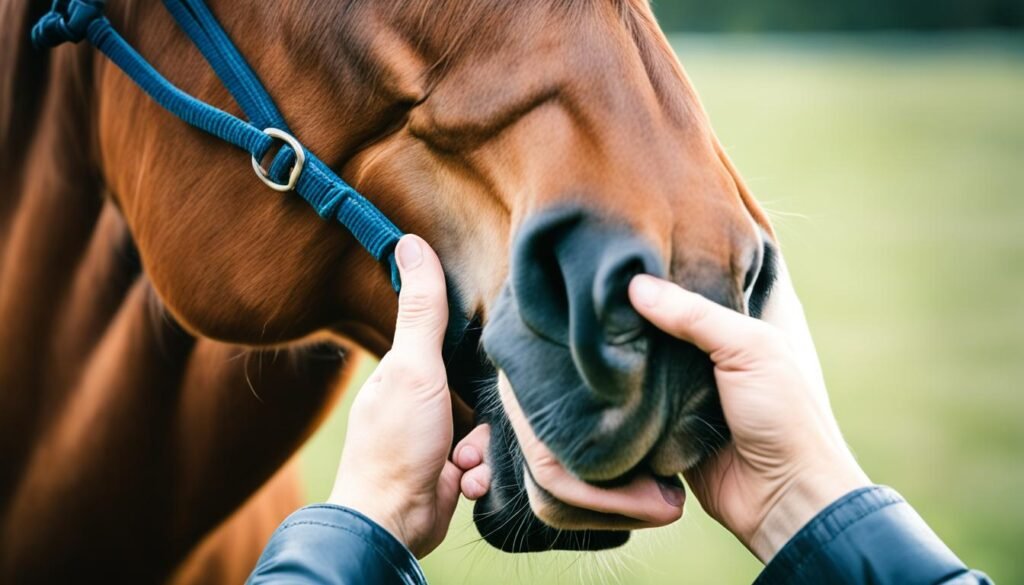
As we continue to explore the nuances of the horse-human bond, we uncover a world of fascinating insights that shed light on the remarkable interspecies relationship we share.
Through this lens, we can deepen our appreciation for the historical significance and emotional depth of our connection with these magnificent animals, ultimately enriching our own lives and the lives of those around us.
Animal-Assisted Therapy
In the realm of therapeutic interventions, the integration of animals has proven to be a transformative force, particularly when it comes to equine-assisted therapy.
The unique bond between humans and horses can unlock profound benefits for individuals seeking physical, emotional, and psychological healing.
Benefits of Equine Therapy
Equine therapy, a subfield of Animal-Assisted Therapy, harnesses the multisensory perception and empathetic nature of horses to create a profoundly immersive therapeutic experience. By engaging with these majestic creatures, individuals can:
- Improve physical wellbeing through activities that promote balance, coordination, and muscle development
- Enhance emotional regulation and self-awareness, fostering greater emotional resilience
- Cultivate a sense of trust, connection, and communication, crucial for healthy interpersonal relationships
- Alleviate symptoms of mental health conditions, such as anxiety, depression, and post-traumatic stress disorder
The Equine Therapy approach recognizes the inherent therapeutic value of the horse-human bond, allowing individuals to benefit from the horses’ intuitive sensitivity and non-judgmental presence.
Through this collaborative, interactive process, clients can unlock new pathways for personal growth, healing, and self-discovery.
| Therapeutic Benefit | Impact on Mental Health | Impact on Physical Wellbeing |
|---|---|---|
| Emotional Regulation | Reduced symptoms of anxiety and depression | Improved mood and stress management |
| Communication and Trust | Enhanced interpersonal skills and social interaction | Increased confidence and self-esteem |
| Sensory Awareness | Heightened mindfulness and present-moment focus | Improved balance, coordination, and motor skills |
Intuitive Communication
Beyond the realm of verbal exchange, the connection between horses and humans can blossom into a profound level of intuitive communication.
This synergistic bond emerges from their shared multisensory experiences, allowing for a deeper understanding of each other’s nonverbal cues and empathic understanding.
Horses, with their highly sensitive and perceptive nature, possess an innate ability to read human emotions and intentions through the subtlest of body language and subtle shifts in energy.
Conversely, humans who have developed a strong rapport with horses can often intuitively interpret the equine’s state of mind, anticipating their needs and responding accordingly.
- This intuitive communication is rooted in the equine-human communication that transcends the spoken word, relying on a shared language of body language, energy, and empathic understanding.
- By attuning to the nonverbal cues of their equine counterparts, humans can forge a deeper connection, fostering an environment of trust, respect, and mutual understanding.
- The essence of this intuitive communication lies in the ability to empathize with the horse’s experiences, thoughts, and feelings, allowing for a more harmonious and enriching interaction.
Embracing this intuitive communication opens the door to a harmonious and fulfilling relationship between horses and humans, one that transcends the boundaries of spoken language and delves into the realm of shared sensory experiences and empathic understanding.
Interspecies Connection
The profound bond between horses and humans extends far beyond the surface. Delving deeper, we uncover the intricate neurological mechanisms that underpin this interspecies connection.
At the heart of this phenomenon lies a remarkable phenomenon known as empathic perception, a cross-wiring of the senses that allows for a deeper level of understanding and communication.
Empathic Perception: Sensing the Other’s Experience
Empathic perception is the remarkable ability to intuitively sense and resonate with the emotional and physiological state of another being. In the context of horse-human interactions, this manifests as an uncanny awareness of the horse’s inner world, allowing for a more nuanced and responsive approach to their needs and behaviors.
Neurological Cross-wiring: The Science of Interspecies Rapport
Cutting-edge research in the field of neuroscience has shed light on the neurological mechanisms that facilitate this empathic connection. Through a process known as neurological cross-wiring, certain neural pathways in the brain become interlinked, enabling the seamless integration of sensory information from both species.
This multisensory integration allows for a heightened awareness of the horse’s emotional and physical state, fostering a deeper level of understanding and communication.
By delving into the intricate workings of the brain, we gain a deeper appreciation for the profound and complex nature of the horse-human bond.
This interspecies connection, rooted in empathic perception and neurological cross-wiring, paves the way for more meaningful and enriching interactions, ultimately shaping the very fabric of our relationships with these magnificent creatures.
Sensory Blending
Horses possess a remarkable ability to perceive and interpret the world through a multisensory lens. This phenomenon, known as synesthesia, allows them to blend various sensory inputs, creating a uniquely rich and nuanced understanding of their surroundings.
At the heart of this captivating process are the intricate interplay of visual and auditory cues that shape the equine experience.
Visual Cues: Windows to the Equine Mind
Horses are highly attuned to the visual landscape, with a panoramic field of vision that enables them to detect the slightest movements and subtle changes in their environment.
Their sensitivity to color, contrast, and spatial relationships is truly remarkable, allowing them to navigate their world with remarkable precision.
This visual acuity, when combined with their synesthetic abilities, enables horses to form intricate mental maps of their surroundings, encoding a wealth of information that informs their behavior and interactions.
Auditory Cues: The Language of Equine Communication
Equally important to the equine sensory experience are the auditory cues that permeate their world. Horses possess a keen sense of hearing, capable of detecting a wide range of frequencies and sound intensities.
From the gentle nickering of a familiar companion to the distant rumble of thunder, these auditory inputs are seamlessly integrated into the horses’ multisensory perception, informing their emotional responses and social interactions.
By understanding the interplay between visual and auditory cues in the equine experience, we can gain valuable insights into the intricate workings of the equine mind.
This knowledge, in turn, can enhance our ability to forge deeper, more meaningful connections with these magnificent creatures, fostering a greater appreciation for their unique perspectives and enriching our own understanding of the natural world.
Equine-Facilitated Learning
Equine-facilitated learning is a transformative approach that leverages the unique multisensory perception and intuitive connection between horses and humans.
By engaging in experiential education with these magnificent animals, individuals can embark on a profound journey of personal growth, self-awareness, and meaningful learning experiences.
The horses’ innate ability to perceive the world through multiple senses, including sight, sound, touch, and even subtle energetic changes, allows for a deeply immersive and impactful learning environment.
As participants interact with the horses, they are invited to observe, reflect, and gain insights that can be applied to their personal and professional lives.
- Equine-Facilitated Learning fosters self-discovery and emotional intelligence by encouraging participants to be present, attentive, and responsive to the horses’ cues.
- The multisensory experiences offered by this approach can help individuals develop heightened awareness, empathy, and communication skills, all of which are crucial for building strong relationships and navigating life’s challenges.
- Experiential education with horses allows for the integration of theoretical knowledge and practical application, enabling participants to translate their insights into meaningful and lasting changes.
- Through equine assisted interventions, individuals can explore personal growth, overcome obstacles, and enhance their overall well-being, making this approach a valuable tool for personal and professional development.
By embracing the power of Equine-Facilitated Learning, individuals can unlock new levels of self-understanding, emotional intelligence, and the ability to forge meaningful connections with both the equine and human worlds.
| Benefits of Equine-Facilitated Learning | Outcomes |
|---|---|
| Heightened self-awareness | Improved emotional intelligence and interpersonal skills |
| Enhanced communication and problem-solving abilities | Increased resilience and adaptability |
| Deeper connection with the natural world | Fostering of personal growth and positive life changes |
Impact on Relationships
The remarkable phenomenon of equine synesthesia has a profound impact on the relationships between horses and humans.
This multisensory perception allows horses to perceive the world in a unique way, which can significantly enhance mutual understanding and facilitate the building of trust between the two species.
Enhancing Understanding
When humans interact with horses who experience equine synesthesia, they gain a deeper appreciation for the horse’s perspective. Horses can perceive sensory cues that may be invisible to humans, such as subtle emotional vibrations or energy shifts.
By recognizing and responding to these nuanced signals, both the horse and the human can develop a more empathetic and intuitive connection.
Building Trust
The heightened empathic communication fostered by equine synesthesia is a powerful tool in building trust between horses and humans. As the human learns to attune to the horse’s multisensory experiences, the horse in turn feels more understood and secure.
This trust-building process can lead to deeper, more meaningful relationships, where the horse and human work in harmony, with a profound mutual understanding.
The impact of equine synesthesia on relationships is truly remarkable. By enhancing understanding and building trust, this unique perceptual experience can transform the way humans interact with and appreciate these remarkable animals.
Exploring the Equine Mind
Delving into the captivating world of the equine mind, we discover a realm where multisensory experiences shape the perception, cognition, and behavior of these magnificent creatures.
By gaining a deeper understanding of how horses interact with their environment, we can enhance our appreciation for their unique perspectives and the intricacies of their inner workings.
Multisensory Experiences
Horses are endowed with a remarkable ability to process and integrate a diverse array of sensory inputs. From their keen eyesight and acute hearing to their heightened sense of smell and tactile sensitivity, equines possess a multifaceted perception of their surroundings.
This multisensory integration allows them to navigate their world with remarkable precision, responding to subtle cues that may escape the human senses.
Interestingly, research suggests that horses may even exhibit synesthetic traits, where stimulation in one sensory modality can trigger a response in another. This phenomenon, known as equine synesthesia, can provide valuable insights into the complexity of equine cognition and the ways in which they process and interpret information.
- Equine behavior and cognition are deeply influenced by their multisensory experiences.
- Horses possess a heightened awareness of their environment, using a blend of visual, auditory, olfactory, and tactile cues to navigate their world.
- Equine synesthesia, the cross-wiring of sensory inputs, may shed light on the intricate workings of the equine mind.
By exploring the equine mind and the multisensory experiences that shape it, we can unlock a deeper appreciation for the remarkable capabilities of these magnificent animals.
This knowledge can not only enhance our interactions with horses but also inform our understanding of interspecies communication and the profound connections that can emerge between humans and their equine counterparts.
Conclusion
As we conclude our captivating exploration of equine synesthesia and its profound impact on the dynamic between horses and humans, we are left with a deeper appreciation for the multisensory realm that equines inhabit.
This remarkable phenomenon not only sheds light on the intricate workings of the equine mind but also underscores the profound potential for enhancing relationships between our species.
By embracing the nuances of interspecies connection and multisensory perception, we unlock the door to a transformative understanding that can enrich our lives and our interactions with the equine world.
Through empathic communication, intuitive bonds, and a shared sensory tapestry, we can forge deeper human-horse relationships that transcend the boundaries of traditional interaction.
As we move forward, let us continue to delve into the captivating world of equine synesthesia, leveraging these insights to cultivate more harmonious, trusting, and mutually beneficial partnerships.
By harnessing the power of this multisensory phenomenon, we can unlock the true potential of the horse-human connection, paving the way for a future where our species coexist in profound understanding and harmony.
FAQ
What is equine synesthesia?
Equine synesthesia is a neurological condition where horses experience the blending or cross-wiring of their senses, allowing them to perceive the world in a unique, multisensory way. This can lead to intuitive connections and enhanced communication with their human counterparts.
How does equine synesthesia affect the horse-human bond?
Equine synesthesia profoundly influences the relationship between horses and humans. By facilitating a deeper understanding of each other’s sensory experiences, it can strengthen the emotional connection, build trust, and foster more meaningful interactions between the two species.
What are the benefits of animal-assisted therapy involving horses?
Equine-assisted therapy leverages the horses’ multisensory perception and unique bond with humans to provide profound physical, emotional, and psychological benefits for individuals seeking healing and personal growth. The therapeutic experience is enhanced by the horses’ intuitive communication and empathic understanding.
How does equine synesthesia enable intuitive communication?
Equine synesthesia allows horses to perceive and respond to nonverbal cues, body language, and subtle emotional signals from humans in a deeply intuitive manner. This shared sensory experience fosters a heightened level of empathic understanding and communication between the two species.
Can equine-facilitated learning benefit human personal growth?
Yes, the unique multisensory experiences and intuitive connection facilitated by equine synesthesia can be leveraged in educational and personal growth settings. Interacting with horses in this way can enhance self-awareness, foster emotional intelligence, and lead to transformative learning experiences.
How can understanding equine synesthesia improve relationships with horses?
By gaining insights into the multisensory perception and cognitive processes of horses, we can enhance our own understanding, communication, and trust within the horse-human relationship. This can lead to more empathic interactions, stronger bonds, and a deeper appreciation for the equine experience.
What can exploring the equine mind teach us about our own perception and cognition?
Delving into the inner workings of the equine mind, shaped by their multisensory experiences, can provide valuable insights into the complexities of human perception, cognition, and sensory integration. This cross-species exploration can foster a greater appreciation for the diversity of sensory experiences and how they shape our understanding of the world around us.