
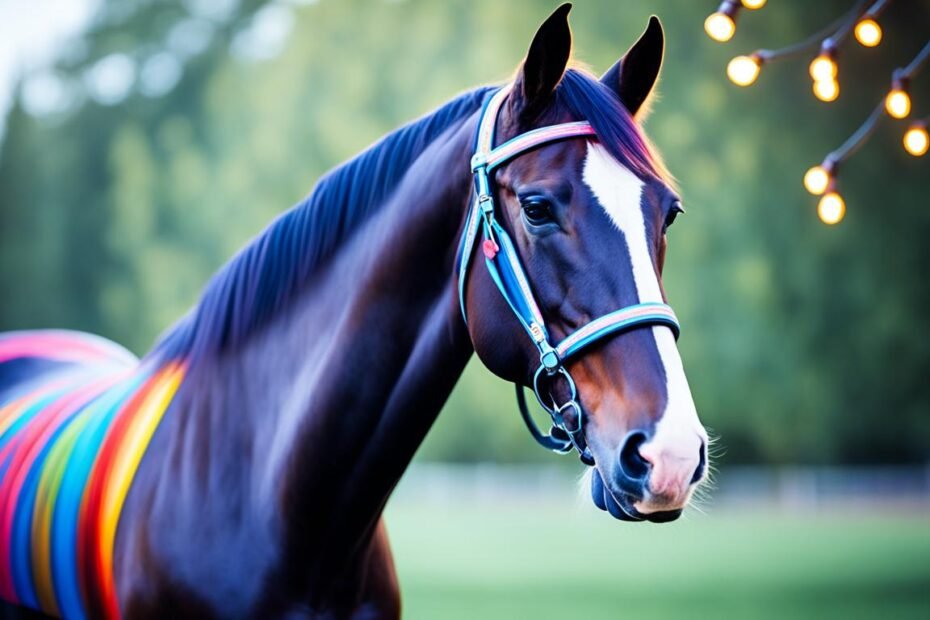
Imagine a world where horses could harness the power of their senses to enhance their well-being and performance. This is the premise of Hypothetical Cross-Sensory Therapy for Equines, an innovative approach that could revolutionize the way we care for and interact with these magnificent animals.
By delving into the fascinating interplay between the senses and equine cognition, we uncover the potential benefits of this groundbreaking therapy.
Key Takeaways
- Explore the concept of Hypothetical Cross-Sensory Therapy for Equines, a novel approach to equine care and rehabilitation.
- Understand the role of multimodal perception and neuroplasticity in equine cognition and how it can be leveraged for therapeutic applications.
- Discover the potential benefits of cross-sensory therapy, including improved rehabilitation, enhanced training, and strengthened human-horse bonds.
- Examine the current research on cross-sensory integration and its implications for the equine industry.
- Delve into the ethical considerations and holistic approaches in the world of equine therapy.
Multimodal Perception and Equine Cognition
Horses possess a remarkable ability to perceive and process information through multiple sensory modalities, a phenomenon known as multimodal perception.
These intelligent animals integrate and interpret various sensory inputs, from visual and auditory cues to tactile and olfactory stimuli, to form a comprehensive understanding of their environment.
Understanding Sensory Integration in Horses
Horses rely on their highly developed senses to navigate the world around them. They have exceptional vision, capable of detecting subtle movements and picking up on visual details that humans often miss.
Their acute hearing allows them to detect the slightest sounds, while their sensitive olfactory system enables them to gather valuable information from scents in the air.
Additionally, horses’ tactile sensitivity, particularly in their muzzles and legs, plays a crucial role in their daily activities and interactions.
The seamless integration of these multiple sensory inputs is a testament to the complexity of equine cognition. Horses have the remarkable ability to process and synthesize this information, allowing them to navigate their environment, communicate with herd members, and respond to various stimuli in their surroundings.
The Role of Neuroplasticity in Cross-Sensory Therapy
The brain’s remarkable capacity to adapt and reorganize itself, known as neuroplasticity, holds great potential for enhancing equine rehabilitation and training through cross-sensory therapy.
By strategically engaging multiple sensory modalities during therapy, researchers and practitioners aim to stimulate the horse’s brain, potentially leading to improved recovery, enhanced performance, and stronger human-animal bonds.
Exploring the intersection of Multimodal Perception, Equine Cognition, Sensory Integration, and Neuroplasticity is crucial for developing innovative and effective cross-sensory therapy approaches that can benefit horses and their caretakers alike.
Hypothetical Cross-Sensory Therapy for Equines
In the realm of equine rehabilitation and well-being, a hypothetical cross-sensory therapy has emerged as a promising approach. This innovative therapy aims to stimulate and integrate multiple sensory pathways simultaneously, harnessing the principles of sensory integration and neuroplasticity.
By leveraging the horse’s innate ability to perceive and process a wide range of sensory cues, this therapy could potentially offer new avenues for Equine Rehabilitation and Alternative Therapies.
The foundation of this hypothetical cross-sensory therapy lies in the recognition that horses are highly sensitive and perceptive animals, capable of processing information through various sensory modalities, including visual, auditory, tactile, olfactory, and proprioceptive.
By strategically combining and stimulating these senses, the therapy aims to create a multisensory experience that can enhance the horse’s overall well-being, rehabilitation, and training.
The key aspects of this hypothetical Hypothetical Cross-Sensory Therapy for Equines include:
- Utilization of specialized equipment and techniques to engage multiple senses simultaneously, such as auditory, visual, and tactile stimuli.
- Incorporation of Equine Rehabilitation exercises and activities that challenge the horse’s sensory integration and neuroplasticity.
- Personalized treatment plans tailored to the individual horse’s needs, abilities, and responses.
- Collaboration between equine specialists, veterinarians, and therapists to ensure a comprehensive and holistic approach.
By harnessing the power of cross-sensory stimulation, this hypothetical therapy holds the potential to unlock new possibilities in equine rehabilitation, training, and overall well-being.
As research and practical applications continue to evolve, the future of Hypothetical Cross-Sensory Therapy for Equines remains an exciting and promising frontier in the world of Alternative Therapies for our equine companions.
Benefits of Cross-Sensory Therapy for Equines
The revolutionary concept of Equine Rehabilitation through Sensory Integration holds immense promise for transforming the way we approach Horse Training and Performance.
By stimulating multiple sensory pathways simultaneously, this innovative therapeutic approach could unlock unprecedented possibilities for our equine companions.
Improved Rehabilitation and Recovery
The cross-sensory therapy model capitalizes on the horse’s innate neuroplasticity, the brain’s remarkable ability to adapt and rewire itself.
By engaging the animal’s senses of sight, sound, touch, and balance in a coordinated manner, this therapy can help horses overcome physical and behavioral challenges more effectively. Imagine a horse recovering from an injury or illness regaining full function and mobility through a tailored, multisensory rehabilitation program.
Enhanced Training and Performance
But the benefits extend beyond just rehabilitation. Sensory Integration techniques can also elevate the Horse Training process, unlocking new levels of Performance.
By heightening the horse’s awareness and responsiveness through cross-sensory stimulation, riders and trainers can forge deeper connections, refine communication, and unlock the true potential of their equine partners.
| Benefit | Description |
|---|---|
| Improved Rehabilitation and Recovery | Leverages neuroplasticity and multisensory engagement to accelerate recovery from injuries and illnesses. |
| Enhanced Training and Performance | Enhances communication, responsiveness, and connection between horse and rider, unlocking new levels of athletic excellence. |
As we delve deeper into the realm of Sensory Integration and its application in the Equine Rehabilitation and Horse Training domains, the possibilities for revolutionizing equine care and performance become increasingly compelling.
By harnessing the power of cross-sensory therapy, we can unlock a new era of health, well-being, and unparalleled Performance for our beloved four-legged companions.
Current Research on Cross-Sensory Integration
The realm of Equine Research has witnessed a growing fascination with the intricate workings of the equine mind. At the forefront of this exploration is the study of Sensory Integration and Multimodal Perception in horses.
Researchers have delved deep into understanding how these magnificent creatures process and integrate diverse sensory inputs, paving the way for innovative therapeutic approaches.
Recent studies have shed light on the remarkable neuroplasticity of the equine brain, revealing its remarkable ability to adapt and reorganize in response to various stimuli.
This discovery has ignited the potential for Cross-Sensory Therapy, where the synergistic integration of multiple senses can be harnessed to enhance rehabilitation, training, and overall equine well-being.
| Research Area | Key Findings | Potential Applications |
|---|---|---|
| Equine Sensory Perception | Horses possess highly sophisticated sensory systems, with exceptional abilities in vision, hearing, and olfaction. | Developing targeted therapies that engage multiple senses to promote healing, learning, and performance. |
| Equine Neuroplasticity | The equine brain demonstrates remarkable adaptability, capable of reorganizing its neural pathways in response to various experiences and interventions. | Exploring the potential of cross-sensory stimulation to enhance neuroplasticity and facilitate positive behavioral and physiological changes. |
| Multimodal Integration | Horses effortlessly integrate information from different sensory modalities, such as sight, sound, and touch, to form a comprehensive understanding of their environment. | Designing multimodal therapeutic approaches that leverage the horse’s natural propensity for cross-sensory processing. |
As the scientific community delves deeper into the fascinating realm of equine Sensory Integration and Multimodal Perception, the prospects for innovative Equine Research and the development of cutting-edge therapeutic interventions continue to grow. The promise of Cross-Sensory Therapy for equines remains an intriguing and promising avenue of exploration.

Complementary and Alternative Therapies in Equine Care
In the ever-evolving landscape of equine care, the integration of Complementary Medicine and Alternative Therapies has gained significant traction.
As equine enthusiasts and professionals alike seek holistic approaches to safeguard the wellbeing of their four-legged companions, the concept of Holistic Equine Care has emerged as a promising and multifaceted solution.
Exploring Holistic Approaches
Beyond the traditional realm of conventional veterinary medicine, a growing number of equine owners and caregivers have embraced the potential benefits of alternative therapies.
These modalities, which often incorporate elements of mind-body connection, natural remedies, and sensory stimulation, aim to address the horse’s overall well-being, rather than solely focusing on specific ailments or injuries.
Some popular Complementary Medicine and Alternative Therapies in the equine world include:
- Equine Acupuncture
- Chiropractic Care for Horses
- Equine Massage and Bodywork
- Herbal Remedies and Supplements
- Equine Aromatherapy
- Equine Hydrotherapy
These approaches, when integrated thoughtfully alongside conventional veterinary practices, can offer a more comprehensive and personalized approach to Holistic Equine Care. By addressing the horse’s physical, mental, and emotional needs, these therapies have the potential to enhance rehabilitation, improve overall well-being, and strengthen the human-horse bond.
As the field of Complementary Medicine and Alternative Therapies continues to evolve, equine enthusiasts and professionals alike are exploring innovative ways to incorporate these holistic approaches into their care routines.
The integration of Holistic Equine Care practices, such as the hypothetical Cross-Sensory Therapy discussed in previous sections, represents an exciting frontier in the pursuit of optimal equine health and well-being.
Sensory Integration and Horse-Human Bonding
The bond between horses and humans is a captivating and multifaceted relationship, one that is deeply rooted in the interplay of sensory integration and multimodal interaction. As we delve into the realm of equine-human bonding, we uncover the fascinating ways in which horses and their human counterparts perceive and process the world around them.
Horses, with their heightened senses and keen awareness, possess an exceptional ability to integrate diverse sensory cues, from the subtlest shift in body language to the nuanced inflections in our voices. This innate capacity for sensory integration allows them to better understand and anticipate the intentions and emotional states of their human companions, fostering a profound level of trust and cooperation.
Conversely, when humans strive to attune themselves to the multimodal perception of horses, they unlock new avenues for communication and connection. By attuning to the subtle visual, auditory, and tactile signals that horses employ, we can forge a deeper understanding and appreciation for their unique perspectives, ultimately strengthening the equine-human bond.
Through this harmonious exchange of sensory cues and shared understanding, horses and humans can embark on a journey of mutual growth and enrichment.
As we continue to explore the intricacies of sensory integration and multimodal interaction, the potential for enhancing the equine-human bond becomes ever more apparent, paving the way for truly transformative therapeutic and educational experiences.

Ethical Considerations in Equine Therapy
As the field of Hypothetical Cross-Sensory Therapy for Equines continues to evolve, it is crucial to address the ethical considerations surrounding this innovative approach. Prioritizing Equine Welfare and Equine Safety must be the utmost priority when implementing any therapeutic intervention for our equine companions.
Ensuring Equine Welfare and Safety
Equine welfare is paramount in the application of Hypothetical Cross-Sensory Therapy. Researchers and practitioners must ensure that the therapy is designed and implemented with the highest standards of care, respecting the horses’ well-being and avoiding any potential harm or distress.
Thorough Ethical Considerations must be carefully evaluated to uphold the principles of beneficence, non-maleficence, and respect for the autonomy of the horses involved.
Maintaining equine safety is also a crucial aspect of Ethical Considerations in this field. The therapy must be administered in a controlled and monitored environment, with comprehensive safety protocols in place to protect the horses from any unforeseen risks or adverse reactions.
Ongoing monitoring and assessment of the horses’ physical and behavioral responses are essential to ensure their well-being throughout the therapeutic process.
- Prioritize Equine Welfare as the primary concern in the application of Hypothetical Cross-Sensory Therapy.
- Implement robust safety measures to safeguard Equine Safety and prevent any potential harm or distress.
- Conduct thorough Ethical Considerations to uphold the principles of beneficence, non-maleficence, and respect for equine autonomy.
- Continuously monitor and assess the horses’ responses to ensure their well-being during the therapeutic process.
By addressing these Ethical Considerations with the utmost care and diligence, the equine therapy community can ensure that Hypothetical Cross-Sensory Therapy is applied in a manner that prioritizes the horses’ well-being and fosters a deep respect for their welfare and safety.
Case Studies: Cross-Sensory Therapy in Practice
Equine enthusiasts and professionals have eagerly embraced the potential of Cross-Sensory Therapy, and the real-world case studies presented here illustrate its transformative impact on equine rehabilitation, training, and overall well-being.
By examining specific examples, readers will gain a deeper understanding of how this innovative therapy can benefit horses in diverse scenarios.
One remarkable case involves Bella, a quarter horse mare who suffered a debilitating leg injury during a competition. Through a carefully crafted Cross-Sensory Therapy program, Bella regained her strength, coordination, and confidence, ultimately returning to the show ring with improved performance and a renewed zest for life.
Equine Rehabilitation specialists closely monitored Bella’s progress, noting significant improvements in her sensory integration and overall mobility.
Another success story features Raiden, a spirited Clydesdale gelding who struggled with anxiety and behavioral issues during training sessions.
By incorporating Cross-Sensory Therapy techniques, Raiden’s trainers were able to help him become more receptive to cues, leading to enhanced focus and a stronger bond between horse and human. The result was a transformed Raiden, who excelled in his training and went on to win several prestigious competitions.
FAQ
What is Hypothetical Cross-Sensory Therapy for Equines?
Hypothetical Cross-Sensory Therapy for Equines is an innovative approach that aims to stimulate and integrate multiple sensory pathways in horses simultaneously.
By harnessing the principles of multimodal perception and neuroplasticity, this therapy could potentially offer new avenues for equine rehabilitation, training, and overall well-being.
How does Hypothetical Cross-Sensory Therapy work?
Hypothetical Cross-Sensory Therapy for Equines is based on the understanding that horses possess a remarkable ability to perceive and process information through multiple sensory modalities, known as multimodal perception.
This therapy aims to stimulate and integrate various sensory inputs, such as visual, auditory, tactile, and olfactory cues, to promote neuroplasticity and enhance the horse’s overall sensory experience and perception.
What are the potential benefits of Hypothetical Cross-Sensory Therapy for Equines?
Hypothetical Cross-Sensory Therapy for Equines could potentially offer several benefits, including improved rehabilitation and recovery, enhanced training and performance, and strengthened horse-human bonding.
By stimulating multiple sensory pathways simultaneously, this therapy may help horses regain function, overcome physical and behavioral challenges, and reach new levels of athletic excellence.
How does Hypothetical Cross-Sensory Therapy differ from traditional equine therapies?
Hypothetical Cross-Sensory Therapy for Equines takes a more holistic and integrative approach compared to traditional equine therapies.
Rather than focusing on a single sensory modality, this innovative therapy aims to engage multiple senses simultaneously, harnessing the principles of multimodal perception and neuroplasticity to facilitate more comprehensive and potentially more effective rehabilitation and training outcomes.
What are the ethical considerations in implementing Hypothetical Cross-Sensory Therapy for Equines?
When implementing Hypothetical Cross-Sensory Therapy for Equines, it is crucial to prioritize equine welfare and safety.
Any therapeutic intervention must be designed and applied with the highest standards of care and respect for the horses’ well-being, ensuring that the therapy does not cause undue stress or discomfort and that the horses’ overall health and comfort are the top priorities.
Where can I find more information about the current research on Hypothetical Cross-Sensory Therapy for Equines?
The current research on cross-sensory integration in equines is an evolving field, and scientists are actively exploring the potential applications of this approach. You can find the latest updates and studies in scholarly journals, as well as through consulting with equine veterinarians, researchers, and specialized practitioners who are at the forefront of this innovative therapy.