
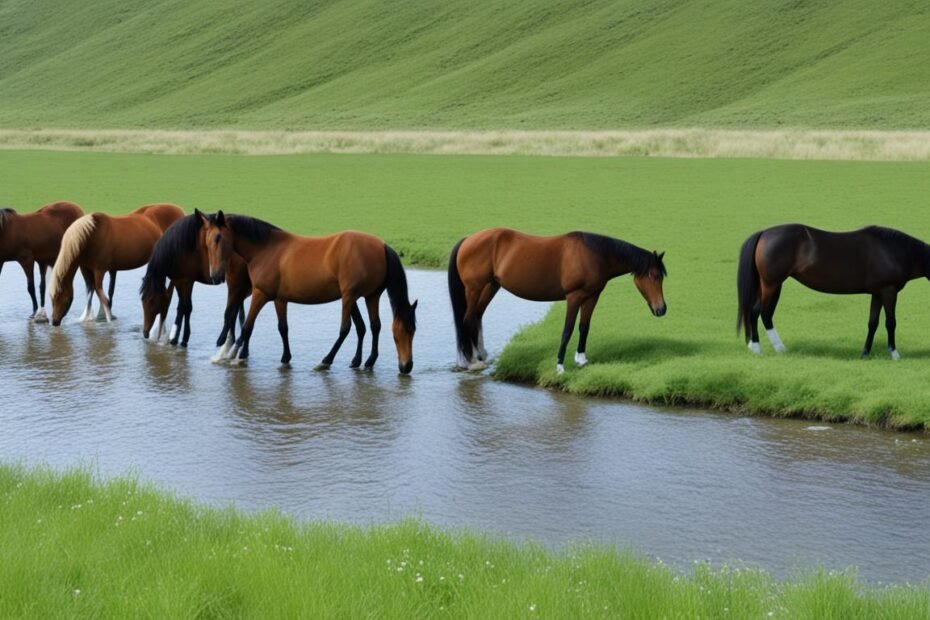
Amidst the ever-evolving challenges of environmental conservation, a unique and innovative approach has emerged – the use of horses in riverbank stabilization.
This article delves into the fascinating intersection of equine-assisted restoration and sustainable land management practices, exploring how these majestic creatures can play a crucial role in mitigating riverbank erosion and enhancing the overall health of our precious riparian ecosystems.
The Role of Horses in Riverbank Stabilization is a comprehensive exploration of this nature-based solution, shedding light on the science behind the approach and the myriad of ecological benefits it offers.
From understanding the underlying causes of riverbank erosion to examining the intricate relationships between hoofed grazers and riparian zones, this article presents a holistic perspective on the role of horses in shaping the future of sustainable land management.
Key Takeaways
- Horses can play a vital role in riverbank stabilization through their grazing and hoof action
- Equine-assisted restoration can help mitigate erosion and enhance the overall health of riparian ecosystems
- Integrating horses with other sustainable land management techniques can lead to improved ecosystem services and increased biodiversity
- Understanding the complex relationships between hoofed grazers and riparian zones is crucial for effective implementation
- Leveraging the power of horses in riverbank stabilization represents a nature-based solution with promising environmental and economic benefits
Understanding Riverbank Erosion
Riverbank erosion is a natural process that occurs when the flowing water in rivers and streams gradually wears away the soil and vegetation along the banks. This phenomenon is a significant environmental concern, as it can have far-reaching consequences for ecosystems and local communities.
Understanding the causes and effects of riverbank erosion is crucial in developing effective strategies to mitigate its impacts.
Causes and Consequences
The primary causes of riverbank erosion include increased water flow, changes in land use, and extreme weather events. Factors such as heavy rainfall, rapid snowmelt, and human activities like construction, mining, and agricultural practices can all contribute to the accelerated erosion of riverbanks.
The consequences of this erosion can be severe, including the loss of valuable farmland, damage to infrastructure, and the disruption of natural habitats for wildlife.
Traditional Mitigation Techniques
Historically, various traditional methods have been employed to control riverbank erosion. These include the construction of engineered structures like retaining walls, gabions, and rip-rap, as well as the planting of vegetation to stabilize the banks.
While these techniques can be effective in some cases, they often come with high costs, environmental impacts, and limited long-term sustainability.
As we explore more holistic and nature-based solutions to address riverbank erosion, the role of horses in riverbank stabilization has emerged as a promising approach. By understanding the unique capabilities of horses and their influence on riparian zones, we can develop innovative strategies to protect and restore these vital ecosystems.
The Role of Horses in Riverbank Stabilization
When it comes to riverbank stabilization, the often overlooked role of horses can be a game-changer. These hoofed animals possess unique physical characteristics and natural behaviors that make them valuable allies in the fight against riverbank erosion.
Horses’ strong and sturdy hooves create a distinct imprint on the soil, compacting it and enhancing the structural integrity of riverbanks. As they graze and move along the riparian zones, their hoof impacts help to anchor the soil, reducing the risk of it being washed away by powerful currents or heavy rainfall.
Moreover, horses’ grazing patterns play a crucial part in maintaining the balance of vegetation along riverbanks. By selectively consuming certain plant species, they help to promote the growth of deep-rooted, erosion-resistant vegetation that reinforces the riverbanks.
This symbiotic relationship between horses and the riverine ecosystem is a testament to the power of hoofed animals in riparian zones.
The scientific evidence supporting the use of horses in riverbank stabilization is compelling. Studies have shown that the presence of horses in grazing impacts on riverbanks can significantly reduce the rate of erosion, leading to more stable and resilient riverbanks that can withstand the forces of nature.
As we explore the concept of equine assisted erosion control, it becomes clear that horses are not just gentle companions, but can also be invaluable partners in the field of riverbank stabilization, helping to protect our vital water resources and the surrounding ecosystems.
Hoofed Grazers: Nature’s Landscapers
In the intricate web of riverbank ecosystems, hoofed grazers, such as horses, play a fascinating role as “natural landscapers.” Their unique herd behavior and grazing patterns have a profound impact on the vegetation and soil structure of riparian zones, ultimately contributing to the stabilization of these vital areas.
Herd Behavior and Riparian Zones
Hoofed grazers, like horses, have an innate tendency to form herds and graze in a synchronized manner. This collective behavior, when applied to riparian zones, can have a remarkable effect on the landscape. As the herd moves through the area, their grazing patterns help maintain a diverse and healthy plant community, preventing the dominance of a few aggressive species and promoting the growth of deep-rooted vegetation that helps anchor the riverbanks.
Moreover, the trampling action of hoofed grazers can help break up compacted soil, allowing for better water infiltration and the establishment of a more resilient root system. This, in turn, enhances the overall soil structure and stability of the riverbanks, making them more resistant to erosion.
| Role of Hoofed Grazers | Impact on Riparian Zones |
|---|---|
| Herd Behavior | Maintains diverse plant community, prevents aggressive species dominance |
| Grazing Patterns | Promotes deep-rooted vegetation for riverbank stabilization |
| Trampling Action | Improves soil structure and water infiltration |
By understanding the role of hoofed grazers in riparian ecosystems, land managers can integrate these natural “landscapers” into their riverbank stabilization strategies, leveraging their unique behaviors and grazing habits to enhance the resilience and sustainability of these critical environments.
Equine Assisted Restoration Practices
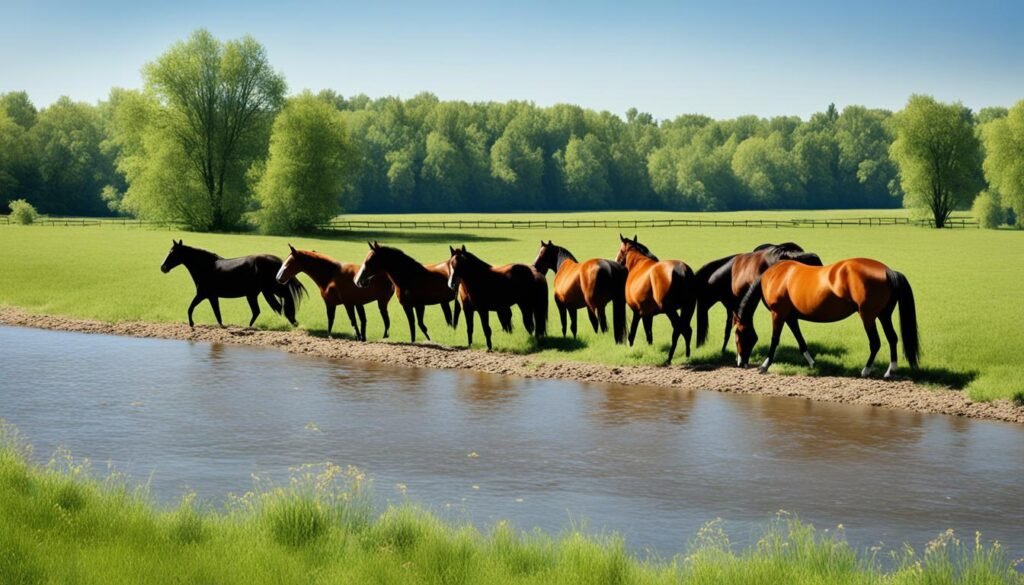
Harnessing the power of horses can be a game-changer when it comes to riverbank stabilization. Equine assisted restoration practices offer a unique and effective approach to address the challenges of grazing management for riverbank stabilization and livestock integration in riparian zones.
One of the key techniques in this realm is targeted grazing. Horses, with their natural grazing behaviors, can be strategically deployed to selectively remove invasive plant species and promote the growth of native vegetation along the riverbanks. This not only enhances the stability of the riverbanks but also contributes to the overall horse-based erosion control efforts.
Alongside targeted grazing, the integration of horses’ hoof impact can play a crucial role. As horses graze, their hooves can create small indentations and micro-depressions in the soil, which can trap sediment and encourage the establishment of new vegetation. This holistic approach combining grazing and hoof action can be particularly effective in restoring degraded riparian zones.
Moreover, horses can be seamlessly integrated with other conservation methods, creating a synergistic effect. For instance, by combining equine assisted restoration with strategic fencing, water access management, and the introduction of native plant species, the overall riverbank stabilization efforts can be amplified, leading to the restoration of healthy and resilient riparian ecosystems.
By embracing the unique capabilities of horses, land managers and conservation practitioners can unlock a powerful tool for riverbank stabilization and the rejuvenation of fragile riparian habitats. The integration of equine assisted restoration practices can be a transformative approach for sustainable land management and the preservation of valuable natural resources.
| Equine Assisted Restoration Techniques | Benefits |
|---|---|
| Targeted Grazing | Selectively removes invasive plants, promotes native vegetation growth |
| Hoof Impact | Creates micro-depressions, traps sediment, encourages new plant establishment |
| Integrated Approach | Combines equine practices with other conservation techniques for greater impact |
Sustainable Land Management Strategies
Effective riverbank stabilization requires a holistic approach that seamlessly integrates various techniques. One such strategy is the incorporation of horses in erosion control efforts, which can be combined with other sustainable land management practices for a multi-faceted solution.
Integrating Horses with Other Techniques
Equine-assisted restoration can be a powerful tool when used in conjunction with other approaches, such as strategic vegetation planting, engineered structures, and natural channel design.
By leveraging the unique capabilities of horses, land managers can create a comprehensive system that addresses the root causes of riverbank erosion while promoting the overall health of the ecosystem.
For instance, horses can be deployed to graze on problematic vegetation, preparing the ground for the introduction of native plant species that help stabilize the banks. Their hooves can also contribute to the creation of a diverse microhabitat, encouraging the establishment of a thriving riparian ecosystem.
Complemented by engineered solutions, such as bioengineered structures or natural channel modifications, this integrated approach can deliver long-lasting, sustainable land management outcomes.
| Technique | Description | Benefits |
|---|---|---|
| Vegetation Planting | Strategically planting native species to stabilize riverbanks and promote ecosystem health | Enhances soil stability, provides habitat for wildlife, and contributes to a natural aesthetic |
| Engineered Structures | Implementing engineered solutions, such as bioengineered structures, to reinforce riverbanks | Offers immediate stabilization, while complementing natural restoration efforts |
| Natural Channel Design | Modifying the natural shape and flow of the river to promote long-term bank stability | Aligns with the river’s natural processes, reducing future maintenance needs |
| Equine-Assisted Restoration | Utilizing the grazing and trampling behaviors of horses to manage vegetation and create microhabitats | Provides a sustainable, nature-based approach to integrating horses in erosion control efforts |
The key to successful multi-faceted riverbank stabilization lies in tailoring these strategies to the unique environmental conditions of each riverine system.
By adopting a holistic ecosystem management approach, land managers can unlock the full potential of sustainable land management practices, ensuring the long-term resilience and ecological integrity of riverbank environments.
Ecosystem Services and Biodiversity
The presence of horses in riverbank stabilization efforts can have far-reaching benefits for the broader ecosystem. By contributing to the stabilization and restoration of riparian zones, these hoofed animals play a crucial role in preserving ecosystem services and enhancing biodiversity conservation.
Riparian areas, the transitional zones between land and water, are hotspots of biological diversity. The maintenance of these habitats through horse-assisted management can have a cascading positive impact on the overall health and resilience of the ecosystem.
Horses’ unique grazing patterns and herd behaviors can help create a diverse mosaic of vegetation, providing shelter, food, and breeding grounds for a wide range of flora and fauna.
Beyond the direct benefits to biodiversity, the presence of horses in riparian zones can also contribute to the improvement of other essential ecosystem services, such as:
- Water filtration and purification
- Flood control and regulation
- Carbon sequestration and storage
- Nutrient cycling and soil health
By stabilizing riverbanks and promoting the growth of diverse vegetation, horses can help mitigate hoofed animal impacts on ecosystems and enhance the overall resilience of the riparian zone management efforts.
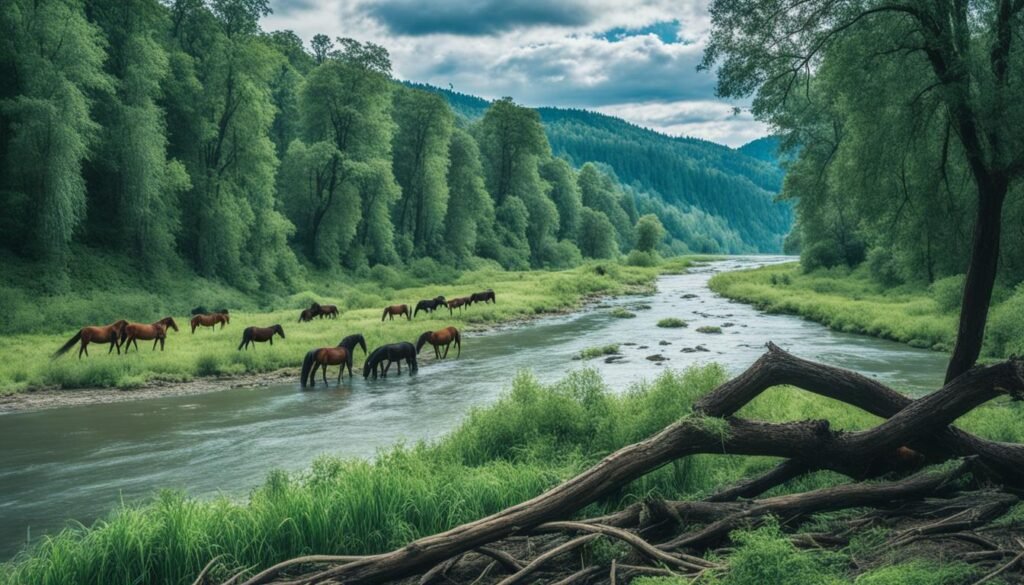
The integration of horses into biodiversity conservation and riparian zone management strategies can have a far-reaching positive impact on the health and sustainability of the entire ecosystem.
As land managers and conservation practitioners continue to explore innovative approaches, the role of horses in preserving and enhancing these critical natural resources remains a promising area of focus.
Case Studies and Success Stories
Exploring the real-world transformation of riparian zones, this section delves into captivating case studies that showcase the power of equine-assisted restoration.
These success stories highlight how the strategic integration of horses has led to measurable improvements in riverbank stabilization, ecosystem health, and community engagement.
Riparian Zone Transformation
In a prime example of equine-assisted restoration, a project in the Midwest United States has rejuvenated a degraded riparian zone along a local river. By leveraging the natural behaviors of grazing horses, the land managers were able to effectively control invasive species, promote the growth of native vegetation, and stabilize the riverbanks.
The once barren and eroding landscape has been transformed into a thriving, biodiverse riparian habitat, providing essential ecosystem services and enhancing the community’s connection to the natural environment.
Similarly, a case study from the Pacific Northwest showcases the successful application of horse-based erosion control techniques. Here, horses were strategically integrated with other restoration methods, such as revegetation and bioengineering, to tackle severe bank erosion and improve overall river health.
The results of this multifaceted approach have been nothing short of remarkable, with the riparian zone transitioning from a degraded state to a vibrant, resilient ecosystem.
These real-world examples demonstrate the profound impact that equine-assisted restoration can have on riverbank stabilization and the revitalization of riparian zones.
By harnessing the natural behaviors and abilities of horses, land managers and conservation professionals have been able to achieve remarkable success in restoring the balance and resilience of these critical ecosystems.
Challenges and Considerations
Implementing equine-assisted restoration for riverbank stabilization presents a unique set of challenges and considerations that require careful planning and stakeholder engagement.
One of the primary concerns is potential conflicts with existing land use, such as agricultural activities or recreational areas. Integrating horses into these sensitive environments requires navigating complex regulatory frameworks and securing buy-in from diverse stakeholders.
Another key consideration is the management of livestock and ensuring their well-being within the riparian zone. Proper grazing patterns, veterinary care, and providing adequate access to water and shelter are essential to maintaining the health and effectiveness of the equine-based restoration efforts.
Additionally, environmental regulations can pose limitations on the use of horses for riverbank stabilization, particularly in areas with sensitive habitats or endangered species. Careful assessment and compliance with local, state, and federal guidelines are crucial to ensuring the sustainable and responsible integration of equine-assisted restoration practices.
Lastly, stakeholder engagement is a critical component of successful implementation. Engaging with local communities, landowners, conservationists, and other key stakeholders can help address concerns, foster collaboration, and ensure the long-term viability of the horse-based erosion control efforts.
By addressing these challenges and considerations through thoughtful planning, regulatory compliance, and inclusive stakeholder engagement, the integration of horses in riparian zone management can be a valuable and sustainable approach to riverbank stabilization.
Conclusion
As we conclude this exploration of the role of horses in riverbank stabilization, it is clear that these magnificent animals can serve as powerful allies in our efforts to address the pressing challenge of erosion along our waterways.
The insights and evidence presented throughout this article have underscored the unique abilities of hoofed grazers to reshape and revitalize riparian landscapes, effectively harnessing the power of nature-based solutions for erosion control.
By highlighting the intricate relationship between herd behavior and the health of riparian zones, as well as the practical application of equine-assisted restoration practices, we have gained a deeper understanding of the multifaceted benefits that horses can bring to sustainable land management strategies.
From improving soil stability and enhancing biodiversity to providing valuable ecosystem services, the integration of horses into our environmental stewardship efforts holds immense promise for the future.
As we look ahead, the continued exploration and adoption of this innovative approach will be crucial in addressing the pressing challenges of riverbank erosion, paving the way for more resilient and ecologically balanced landscapes.
By embracing the power of equine-assisted restoration, we can unlock new possibilities for ecosystem restoration, contributing to the broader effort of safeguarding our natural resources and preserving the delicate balance of our riverine environments.
FAQ
What is the role of horses in riverbank stabilization?
Horses, through their grazing patterns and hoof impact, can play a significant role in riverbank stabilization. Their physical characteristics and natural behaviors contribute to maintaining and enhancing the structural integrity of riverbanks, making them an innovative tool for erosion control and ecosystem management.
How can horses help with riparian zone management?
Horses, as part of the broader group of hoofed grazers, act as “natural landscapers” within riparian ecosystems. Their herd behavior and grazing patterns positively impact the vegetation and soil structure of riverbanks, leading to enhanced stabilization and improved overall ecosystem health.
What are the key equine-assisted restoration practices for riverbank stabilization?
Equine-assisted restoration practices for riverbank stabilization include targeted grazing, hoof impact management, and the integration of horses with other conservation methods, such as vegetation planting and engineered structures. These techniques can be tailored to different riparian environments and ecosystem goals.
How do horses contribute to the ecosystem services and biodiversity of riparian zones?
The presence of horses in riverbank stabilization can contribute to a range of ecosystem services, including improved water quality, habitat provision, and carbon sequestration. Additionally, their integration can support the overall biodiversity and resilience of riparian environments by creating diverse and thriving ecosystems.
What are some of the challenges and considerations in using horses for riverbank stabilization?
Potential challenges and considerations include land use conflicts, livestock management, environmental regulations, and the need for stakeholder engagement. Addressing these factors is crucial to ensure the successful and sustainable integration of horses in riparian zone management.