

In the captivating world of equine training, a groundbreaking discovery has emerged – the power of synesthetic abilities in horses. This article delves into the fascinating realm where senses intertwine, revealing how trainers can harness the unique multi-sensory perceptions of horses to revolutionize the way we approach equine education.
Horses with synesthesia, a neurological phenomenon where senses cross-connect, possess an extraordinary ability to perceive the world through a kaleidoscope of sensations.
By understanding the complexities of this multi-modal experience, trainers can forge deeper connections, enhance communication, and unlock unprecedented levels of learning and retention in their equine partners.
Key Takeaways
- Discover the power of synesthetic abilities in horses and how they can revolutionize equine training
- Explore the neurological basis of cross-modal associations in horses and their impact on equine cognition
- Learn innovative training techniques that leverage the multi-sensory perception of synesthetic horses
- Understand the importance of fostering intuitive communication and building trust in the horse-human bond
- Gain insights into the benefits of training synesthetic horses, including improved learning and emotional intelligence
Understanding Synesthesia in Horses
In the captivating realm of equine synesthesia, horses demonstrate a unique ability to experience a blending of senses, a phenomenon known as multi-sensory perception.
This remarkable neurological phenomenon allows these majestic creatures to associate various sensory inputs, such as sounds, colors, and textures, in unexpected and intriguing ways.
Equine Synesthesia: A Multi-Sensory Phenomenon
Horses with equine synesthesia possess the extraordinary capacity to perceive the world through a multi-dimensional lens.
They may associate a specific sound with a particular color, or a certain texture with a distinct taste. This cross-modal association shapes their understanding of their environment, allowing them to navigate the world with heightened sensitivity and intuition.
Neurological Basis of Cross-Modal Associations
The neurological basis of synesthesia in animals, including horses, is a topic of ongoing research and fascination. Neuroscientists hypothesize that this phenomenon is rooted in the unique wiring of the equine brain, where sensory pathways may be more interconnected than in their non-synesthetic counterparts.
This neurological predisposition enables horses to forge cross-modal associations that transcend the traditional boundaries of sensory perception.
By delving into the captivating world of multi-sensory perception in horses, we can gain a deeper understanding of the complex and extraordinary cognitive abilities of these remarkable animals.
The exploration of equine synesthesia promises to unlock new insights into the intricate workings of the equine mind and the ways in which these magnificent creatures experience and interact with their environment.
The Importance of Multi-Sensory Perception in Horses
Horses are inherently attuned to their surroundings, perceiving the world through a complex interplay of multiple senses. This ability to engage in multi-sensory perception is not only crucial for their survival in the wild but also plays a vital role in their training and the development of the horse-human bond.
Equine cognition is often marked by a heightened sensitivity to their environment, allowing them to detect even the slightest changes in their surroundings. By harnessing this multi-sensory awareness, trainers can develop more intuitive and effective training methods that cater to the natural inclinations of these magnificent animals.
Through the integration of touch, sight, sound, and smell, horses are able to form a comprehensive understanding of their environment. This holistic perception enables them to navigate their world with confidence, respond to subtle cues, and build trust with their human counterparts.
| Sense | Importance in Horse Training |
|---|---|
| Touch | Horses are highly sensitive to touch, making it crucial for trainers to use gentle, consistent handling techniques. |
| Sight | Horses have a wide field of vision, allowing them to detect potential threats and respond accordingly. |
| Sound | Horses have exceptional hearing, and trainers must be mindful of the sounds they introduce during training sessions. |
| Smell | Horses rely heavily on their sense of smell to gather information about their environment and interact with their surroundings. |
By understanding and harnessing the power of multi-sensory perception in horses, trainers can create more effective and rewarding training experiences, fostering a deeper horse-human bond and unlocking the full potential of these remarkable animals.
Training Horses with Synesthetic Abilities
Equine training has evolved beyond traditional methods, embracing the unique multi-sensory abilities of horses with synesthetic traits.
By understanding and leveraging these intuitive, cross-modal associations, trainers can unlock new levels of communication and learning for these remarkable animals.
Innovative Equine Training Techniques
Trainers specializing in synesthetic horse development employ a range of innovative techniques to foster deeper connections between horse and handler. These include:
- Sensory-integrated exercises that engage multiple modalities, such as combining tactile, auditory, and visual cues.
- Customized training programs that account for each horse’s unique synesthetic profile and learning preferences.
- Employing synesthetic-friendly tools and equipment, such as specialized tack and training aids.
Fostering Intuitive Communication
By understanding the intricate workings of equine synesthesia, trainers can develop more intuitive communication strategies. This includes:
- Observing and interpreting the horse’s synesthetic responses to various stimuli, allowing for more nuanced cues and feedback.
- Designing multi-sensory training exercises that resonate with the horse’s cross-modal processing abilities.
- Cultivating a heightened sensitivity to the horse’s unique sensory experiences, fostering a deeper level of trust and cooperation.
These innovative training techniques and intuitive communication strategies are transforming the way horses with synesthetic abilities are educated, leading to enhanced learning, performance, and the strengthening of the horse-human bond.

Enhancing the Horse-Human Bond
Understanding and catering to a horse’s synesthetic abilities can be the key to strengthening the bond between horse and human.
By recognizing the unique way horses perceive and process information, we can foster a deeper level of trust and understanding, leading to more rewarding and fulfilling partnerships.
Building Trust and Understanding
When we acknowledge a horse’s multi-sensory perception, we can tailor our training and interaction methods to better suit their needs. This not only creates a more positive experience for the horse but also helps us build stronger connections based on mutual respect and trust.
- Engage the horse’s senses by incorporating varied sensory cues into training, such as specific sounds, textures, or scents.
- Be attentive to the horse’s responses and adapt your approach accordingly, adjusting the pace, intensity, and timing of cues to align with their synesthetic processing.
- Cultivate patience and empathy, allowing the horse time to understand and respond to your requests through their unique perceptual lens.
By embracing the horse’s synesthetic abilities, we can unlock a deeper level of communication and understanding, fostering a bond that goes beyond the physical and into the realm of the emotional and intuitive.
The rewards of this approach are manifold, as we witness the horse’s increased trust, responsiveness, and overall well-being. In turn, our own experiences with these remarkable animals become more enriching, fulfilling, and thoroughly enjoyable.
Equine Cognition and Synesthetic Abilities
Understanding the intricacies of equine cognition is crucial in unraveling the role of cross-modal associations in horses. Horses possess a remarkable ability to perceive and interpret their surroundings through a multisensory approach, which is often referred to as synesthesia.
Synesthesia in horses is a fascinating neurological phenomenon where the brain’s processing of one sensory input (e.g., sight) automatically triggers a response in another sense (e.g., sound or touch). This unique neurological trait shapes a horse’s perception, learning, and problem-solving abilities, offering valuable insights for their training and overall well-being.
Exploring Equine Cognition
Horses are widely recognized as intelligent and perceptive animals, with cognitive abilities that often surpass those of other domestic species.
Their capacity for memory, problem-solving, and emotional intelligence has been the subject of extensive research. By understanding the intricacies of equine cognition, we can better appreciate how a horse’s synesthetic abilities influence their interactions with the world around them.
- Horses possess remarkable memory and can recall specific individuals, locations, and events from their past experiences.
- They demonstrate problem-solving skills, using their senses and previous knowledge to navigate their environment and overcome challenges.
- Horses exhibit emotional intelligence, forming strong bonds with their human handlers and responding to emotional cues and body language.
The interplay between a horse’s synesthetic abilities and their overall cognitive functions is a captivating area of study, offering insights that can revolutionize the way we approach equine training and care.
The Benefits of Training Synesthetic Horses
Harnessing the unique abilities of horses with synesthetic talents can yield remarkable benefits for equine education and performance.
By understanding and embracing the multi-sensory nature of synesthetic perception, trainers can unlock new avenues for improved learning and enhanced emotional intelligence in these exceptional equines.
Improved Learning and Retention
Horses with synesthetic abilities possess an enhanced capacity for associative learning. When training these animals, their cross-modal associations allow them to more readily connect visual, auditory, and tactile cues, leading to faster acquisition of new skills and improved long-term retention.
This heightened ability to understand and recall information can translate to remarkable progress in areas such as dressage, obstacle navigation, and overall responsiveness to training.
Increased Emotional Intelligence
Synesthetic horses demonstrate a profound emotional sensitivity, able to perceive and respond to the subtle nuances of human expression and body language. By tapping into this innate emotional intelligence, trainers can foster a deeper level of trust and understanding between horse and human.
This, in turn, enhances the bond and allows for more intuitive and effective communication, ultimately improving the overall well-being and performance of the animal.
The benefits of training synesthetic horses extend beyond just the individual animal. By cultivating these unique abilities, trainers can unlock new frontiers in equine education, shaping a future where horses and humans work in seamless harmony, each drawing upon the other’s strengths to achieve extraordinary feats.
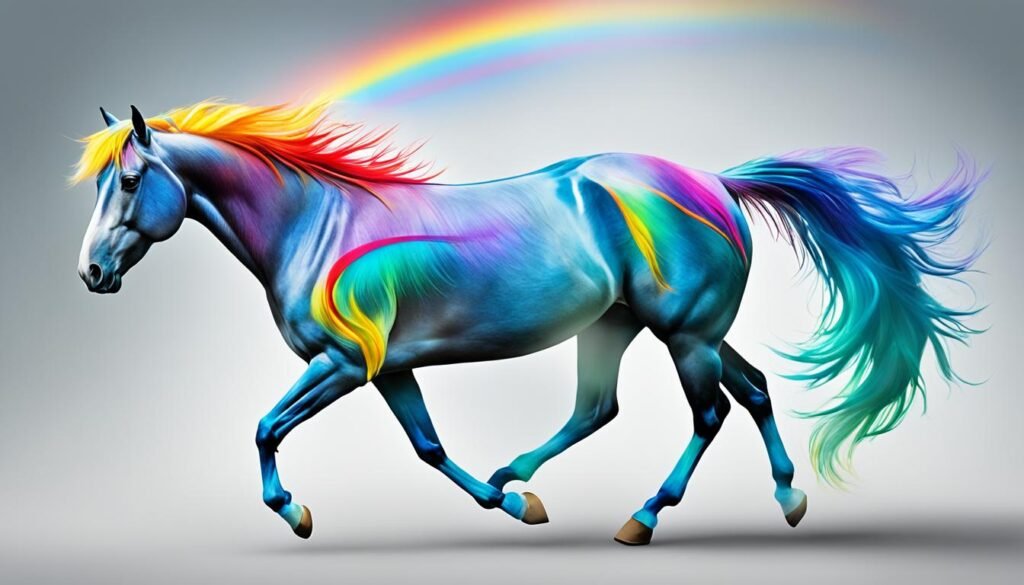
Synesthetic Abilities in Different Horse Breeds
When discussing the fascinating realm of equine synesthesia, it’s important to explore how these unique sensory abilities may manifest across different horse breeds.
From the graceful Arabians to the powerful Clydesdales, each breed possesses its own distinct set of characteristics, and this extends to the way they perceive and interact with their surroundings.
Certain horse breeds, such as the Friesian and the Andalusian, have long been renowned for their heightened sensitivity and intuitive responsiveness. These synesthetic horses may exhibit a heightened awareness of colors, sounds, and even the emotional states of their human companions, allowing for a deeper level of communication and understanding.
On the other hand, breeds like the Quarter Horse and the Appaloosa, known for their athleticism and versatility, may demonstrate synesthetic abilities that are more closely tied to their physical performance and spatial awareness.
These horses may excel at tasks that require the integration of multiple sensory inputs, such as navigating complex obstacle courses or responding to subtle cues from their riders.
Regardless of the breed, the presence of synesthetic abilities in horses can have significant implications for their training, handling, and overall well-being.
By recognizing and accommodating these individual differences, equine professionals can foster a more harmonious and rewarding partnership with their equine partners, unlocking the true potential of these remarkable animals.
| Horse Breed | Synesthetic Characteristics | Implications for Training |
|---|---|---|
| Friesian | Heightened sensitivity to sounds and colors, strong emotional connections | Require a calm, patient approach, focus on building trust and intuitive communication |
| Andalusian | Enhanced spatial awareness, keen sensitivity to subtle cues | Thrive on precise, nuanced training techniques, excel in disciplines that require coordination and agility |
| Quarter Horse | Exceptionally acute visual and proprioceptive senses, adept at interpreting physical cues | Respond well to training methods that emphasize muscle memory and kinesthetic learning |
By understanding the unique synesthetic abilities present in different horse breeds, equine professionals can tailor their training and handling approaches to unlock the full potential of these remarkable animals.
Through this deeper understanding, the bond between horse and human can be strengthened, leading to enhanced performance, trust, and overall well-being.
Case Studies: Successful Synesthetic Horse Training
In the realm of equine education, the innovative approach of training horses with synesthetic abilities has yielded remarkable results. Let’s explore some real-world case studies that showcase the power of this multisensory technique.
Take the case of Bella, a young mare with an exceptional talent for cross-modal associations. Through a customized training program that catered to her synesthetic tendencies, her handlers were able to establish a deep level of trust and intuitive communication.
Bella’s learning process accelerated, and she excelled in various disciplines, from dressage to obstacle courses.
Another inspiring example is that of Jack, a stallion known for his exceptional emotional intelligence. By harnessing his synesthetic abilities, his trainers were able to cultivate a strong bond, allowing Jack to thrive in high-pressure situations, such as mounted police work.
His ability to anticipate his handler’s cues and respond with remarkable precision has made him a valued asset in the field.
These case studies underscore the transformative potential of training horses with synesthetic abilities. By unlocking their multisensory perception, trainers can foster a deeper understanding, enhance learning retention, and ultimately, strengthen the horse-human bond.
The successful synesthetic horse training approach has been applied across various breeds, from spirited Arabians to sturdy Clydesdales.
Each horse’s unique neurological makeup presents its own set of challenges and opportunities, requiring trainers to adopt a personalized approach. However, the remarkable outcomes of these case studies serve as a testament to the power of harnessing the equine’s innate synesthetic abilities.
Conclusion
In the captivating world of equine training, a revolutionary approach has emerged: harnessing the synesthetic abilities of horses.
By delving into the unique multi-sensory perception of these remarkable animals, trainers can unlock new realms of communication, learning, and the profound bond between horse and human.
As we continue to unravel the mysteries of equine cognition, the potential for synesthetic horse training to transform the industry is truly exciting.
Through innovative techniques that foster intuitive understanding, trainers can empower horses with synesthetic abilities to excel in their education, enhance their emotional intelligence, and deepen the horse-human bond.
The neurological basis of cross-modal associations in horses opens up a world of possibilities, allowing trainers to tap into the multi-sensory perception of these magnificent creatures.
By embracing this groundbreaking approach, we can witness the true depths of equine synesthesia and revolutionize the way we perceive and interact with our equine partners.
FAQ
What is equine synesthesia?
Equine synesthesia is a fascinating neurological phenomenon where horses experience a blending of senses, allowing them to perceive the world through a unique, multi-sensory lens.
This cross-modal association enables horses to make intuitive connections between different sensory inputs, such as sight, sound, and touch.
How does a horse’s synesthetic abilities impact their training and learning?
A horse’s synesthetic abilities can greatly enhance their training and learning process. By tapping into their multi-sensory perception, trainers can develop more intuitive communication methods, leading to improved learning retention and performance.
Harnessing a horse’s synesthetic abilities can foster a deeper understanding and trust between the horse and their handler.
What are some innovative training techniques for horses with synesthetic abilities?
Innovative training techniques for horses with synesthetic abilities involve leveraging their cross-modal associations.
This includes using multi-sensory cues, such as pairing specific sounds, sights, and tactile experiences, to create a more immersive learning environment. Trainers also focus on building trust and fostering intuitive communication through mindful, tailored interactions.
How can synesthetic abilities strengthen the horse-human bond?
Understanding and catering to a horse’s synesthetic abilities can significantly strengthen the horse-human bond. By demonstrating a deep appreciation for the horse’s unique sensory experience, trainers can build a foundation of trust and mutual understanding.
This enhanced connection leads to more rewarding and fulfilling partnerships between horses and their handlers.
Are there differences in synesthetic abilities across different horse breeds?
Yes, synesthetic abilities may manifest differently across various horse breeds. Certain breeds may exhibit more pronounced cross-modal associations or display unique patterns of multi-sensory perception.
Trainers must be attuned to these nuances and adapt their techniques accordingly to ensure the most effective and tailored approach for each individual horse.
What are the benefits of training horses with synesthetic abilities?
Training horses with synesthetic abilities can lead to remarkable benefits, including improved learning and retention, increased emotional intelligence, and enhanced overall well-being.
By harnessing the power of multi-sensory perception, trainers can unlock new levels of communication, performance, and the development of a stronger horse-human bond.