

In the captivating world of equine rehabilitation, a groundbreaking revolution is unfolding – the integration of virtual reality (VR) technology to aid in the recovery of horses with rare genetic conditions. This innovative approach is transforming the way veterinarians and animal caretakers approach the challenges of rehabilitating these extraordinary creatures.
Immersive, customizable virtual environments are now being harnessed to provide a multisensory stimulation that engages horses on a deep, primal level.
By leveraging the power of VR, equine specialists can now create personalized recovery plans that address the unique needs of each patient, overcoming the genetic obstacles that have previously hindered their progress.
This remarkable integration of cutting-edge technology and compassionate care is revolutionizing the field of equine rehabilitation, empowering veterinarians and caretakers to achieve remarkable outcomes for horses with rare genetic conditions.
Through the seamless fusion of digital and physical worlds, the future of equine wellness is being redefined, one hoof-step at a time.
Revolutionizing Equine Rehabilitation
The world of equine rehabilitation is undergoing a remarkable transformation, thanks to the advent of cutting-edge virtual reality (VR) technology. This innovative approach to equine care is revolutionizing the way horses with rare genetic conditions are treated and rehabilitated.
Cutting-Edge Immersive Therapy
VR-based rehabilitation offers a unique and immersive experience for horses, allowing them to explore customized virtual environments tailored to their specific needs.
These environments can simulate various scenarios, from serene meadows to challenging obstacle courses, all while providing the horses with a safe and controlled setting to overcome their physical and psychological barriers.
Overcoming Genetic Obstacles
Horses with rare genetic conditions often face significant challenges in their rehabilitation process. VR-based therapy has emerged as a game-changer, providing a means to address these obstacles head-on.
By immersing horses in virtual worlds, therapists can target specific muscle groups, balance, and coordination issues, all while maintaining a controlled and comfortable environment.
| Benefits of VR-based Equine Rehabilitation | Traditional Rehabilitation Approaches |
|---|---|
| Customized virtual environments Multisensory stimulation Targeted muscle and movement training Reduced risk of injury Engaging and motivating for horses | Limited environmental control Reliance on physical interaction Potential for injury during exercises Less engaging for horses Difficulty addressing complex genetic conditions |
As the field of equine rehabilitation continues to evolve, the integration of virtual reality technology is poised to revolutionize the way horses with rare genetic conditions are treated and rehabilitated, offering unprecedented levels of customization, safety, and engagement.
Understanding Rare Genetic Conditions in Horses
Rare genetic conditions in horses are complex and often challenging to manage, presenting unique obstacles for equine rehabilitation. These genetic disorders can manifest in a variety of symptoms, ranging from physical deformities to neurological impairments, making it crucial for veterinary professionals to have a deep understanding of their underlying causes and the specific needs of affected horses.
One rare genetic condition that can impact horses is Polysaccharide Storage Myopathy (PSSM), a disorder that causes muscle stiffness, exercise intolerance, and even paralysis. Another example is Equine Recurrent Uveitis, an autoimmune disorder that can lead to recurrent eye inflammation and vision problems.
These rare conditions not only affect the horse’s physical well-being but can also have significant implications for their overall quality of life and ability to participate in equestrian activities.
Addressing these rare genetic conditions requires a multifaceted approach, combining specialized veterinary care, tailored rehabilitation programs, and a deep understanding of the unique challenges they present.
By staying informed about the latest research and advancements in this field, equine professionals can better serve the needs of horses affected by these rare genetic disorders and ensure the best possible outcomes for their rehabilitation and recovery.
Harnessing the Power of Virtual Reality
In the world of equine rehabilitation, virtual reality (VR) technology has emerged as a revolutionary tool, offering unprecedented possibilities for horses with rare genetic conditions.
By creating customizable virtual environments and leveraging multisensory stimulation, VR is transforming the way we approach equine recovery and well-being.
Customizable Virtual Environments
The beauty of VR lies in its ability to tailor the rehabilitative experience to the unique needs of each horse. Veterinarians and researchers can design immersive virtual landscapes that mimic the horse’s natural habitat, providing a sense of familiarity and comfort during the rehabilitation process.
These customizable environments allow for the introduction of specific challenges and obstacles, gradually building the horse’s strength, agility, and confidence.
Multisensory Stimulation
Beyond the visual realm, VR technology empowers equine rehabilitation by engaging multiple senses. Horses can experience the sights, sounds, and even simulated smells and textures of their virtual surroundings, creating a truly immersive experience.
This multisensory stimulation triggers a powerful physiological response, enhancing the horse’s engagement, motivation, and overall therapeutic progress.
| Feature | Benefit |
|---|---|
| Customizable Virtual Environments | Tailored rehabilitation experience, building strength and confidence |
| Multisensory Stimulation | Enhanced engagement, motivation, and therapeutic outcomes |
By harnessing the power of virtual reality, equine rehabilitation centers can create a transformative environment for horses with rare genetic conditions, empowering them to overcome challenges and thrive on their road to recovery.
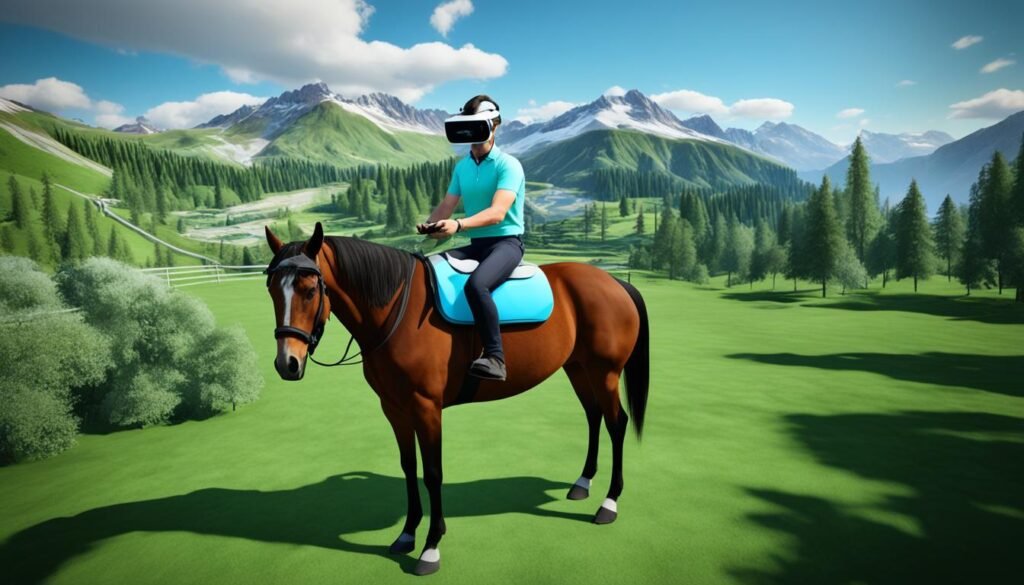
Virtual Reality for Rehabilitating Horses with Rare Genetic Conditions
As the field of equine rehabilitation continues to evolve, the integration of virtual reality (VR) technology has revolutionized the way we approach the rehabilitation of horses with rare genetic conditions.
This innovative approach not only addresses the unique challenges faced by these extraordinary equines but also holds the promise of accelerating their recovery and enhancing their overall well-being.
In the realm of virtual reality, the rehabilitation of horses with rare genetic conditions has found a remarkable ally. These specialized VR-based therapies are designed to create immersive, customizable environments that cater to the specific needs and limitations of each horse.
By leveraging the power of this cutting-edge technology, veterinarians and equine rehabilitation specialists can now devise personalized recovery plans that seamlessly blend physical, cognitive, and emotional rehabilitation.
| Therapeutic Objectives | VR-Based Rehabilitation Strategies |
|---|---|
| Improving Mobility and Strength | Simulated exercises and terrain challenges to gradually build muscle and enhance coordination |
| Enhancing Sensory Awareness | Multisensory experiences that stimulate the horse’s senses, including sight, sound, and touch |
| Reducing Stress and Anxiety | Calming virtual environments that promote relaxation and emotional well-being |
By harnessing the power of virtual reality, veterinary professionals can now overcome the unique obstacles faced by horses with rare genetic conditions, paving the way for more effective and personalized rehabilitation programs.
This transformative approach not only empowers these remarkable equines but also offers a glimpse into the future of equine healthcare, where technology and compassionate care converge to facilitate remarkable recoveries.
Gamified Animal Therapy
Integrating gamified elements into virtual reality-based equine rehabilitation is revolutionizing the way horses with rare genetic conditions approach their recovery. By making the rehabilitation process more engaging and motivating, this innovative approach is enhancing the horses’ participation and overall commitment to their treatment.
Engaging and Motivating Rehabilitation
The introduction of gamified features into the virtual reality environments used for equine rehabilitation has had a profound impact on the horses’ rehabilitation journey.
By incorporating interactive elements, such as challenges, rewards, and personalized progress tracking, the horses are more invested in their own recovery, leading to better outcomes.
- Gamified virtual reality environments provide a stimulating and immersive experience that captivates the horses, making them more eager to participate in their rehabilitation exercises.
- Personalized progress tracking and goal-oriented challenges motivate the horses to push themselves and actively engage with the rehabilitation process.
- Reward systems, such as virtual treats or positive reinforcement, further encourage the horses to continue their rehabilitation efforts, fostering a sense of accomplishment and well-being.
By harnessing the power of gamification, equine rehabilitation specialists are able to create a more enjoyable and meaningful experience for horses with rare genetic conditions, ultimately leading to better long-term outcomes and improved quality of life.
Digitized Equine Treatments
In the rapidly evolving world of veterinary medicine, the integration of digital technologies is transforming the way we approach the rehabilitation of horses with rare genetic conditions. Digitized Equine Treatments offer a comprehensive and efficient solution, blending innovative virtual reality (VR) applications with traditional rehabilitation methods.
One of the key aspects of this digital approach is the creation of customizable virtual environments. By immersing horses in these tailored VR settings, veterinarians and equine specialists can provide a multi-sensory stimulation that closely mimics real-world scenarios.
This allows for a more targeted and effective rehabilitation process, addressing the unique challenges posed by the horse’s genetic condition.
- Customizable virtual environments for personalized rehabilitation
- Multi-sensory stimulation to enhance the rehabilitation experience
- Seamless integration of digital technologies with traditional treatment methods
Furthermore, the use of Digitized Equine Treatments enables veterinarians to monitor the horse’s progress in real-time, making adjustments to the rehabilitation plan as needed. By leveraging data-driven insights and AI-powered analysis, these digital tools provide a more holistic and personalized approach to equine recovery, ensuring optimal outcomes for horses with rare genetic conditions.
The future of equine rehabilitation is undoubtedly digital, as the integration of cutting-edge technologies continues to revolutionize the way we care for our equine companions.
Digitized Equine Treatments offer a promising solution, empowering veterinarians and equine specialists to provide more comprehensive and efficient care, ultimately improving the well-being of horses with rare genetic conditions.
Interactive Genetic Condition Management
As the equine rehabilitation landscape evolves, virtual reality technology is proving to be a powerful tool in managing horses with rare genetic conditions.
By integrating interactive genetic condition management strategies, rehabilitation programs can deliver personalized recovery plans and implement real-time monitoring and adjustments to optimize the rehabilitation journey.
Personalized Recovery Plans
Virtual reality-based rehabilitation programs are revolutionizing the way we approach equine rehabilitation. Using advanced data analytics and machine learning algorithms, these programs can create tailored recovery plans that address the unique needs of each horse.
This personalized approach ensures that the rehabilitation process is targeted and effective, addressing the specific genetic factors contributing to the horse’s condition.
Real-Time Monitoring and Adjustments
The integration of real-time monitoring capabilities within virtual reality-based rehabilitation programs allows for continuous assessment and adjustment of the recovery process. By closely tracking the horse’s progress, veterinarians and rehabilitation specialists can make timely interventions, fine-tuning the therapy and adapting the virtual environment to ensure optimal outcomes.
This dynamic approach empowers caregivers to continuously refine the rehabilitation plan, maximizing the horse’s chances of a successful recovery.
The intersection of virtual reality, interactive genetic condition management, personalized recovery plans, and real-time monitoring and adjustments is transforming the way we approach equine rehabilitation. These innovative solutions are revolutionizing the industry, offering new hope and improved outcomes for horses with rare genetic conditions.
Augmented Reality in Veterinary Medicine
Veterinary medicine is embracing the power of Augmented Reality (AR) to revolutionize the way we care for our equine companions, particularly those with rare genetic conditions. This cutting-edge technology is poised to complement the virtual reality-based therapies discussed in previous sections, creating a holistic approach to rehabilitation and management.
AR technology allows veterinarians to overlay digital information and 3D models directly onto the physical world, providing an enhanced visual experience for both the practitioner and the patient.
In the context of equine rehabilitation, AR can be leveraged to visualize complex anatomical structures, track the progress of recovery, and even simulate potential treatment scenarios.
- Visualizing Anatomical Structures: AR enables veterinarians to superimpose detailed 3D models of a horse’s skeletal and muscular systems, allowing for a deeper understanding of the underlying genetic conditions and their impact on the animal’s physical well-being.
- Tracking Recovery Progress: By integrating AR with real-time monitoring systems, veterinarians can track the horse’s progress in rehabilitation, making adjustments to the treatment plan as needed.
- Simulating Treatment Scenarios: AR can be used to create interactive simulations, enabling veterinarians to test different treatment approaches and visualize the potential outcomes before implementing them in the real world.
The integration of Augmented Reality in veterinary medicine is not limited to the equine industry. This transformative technology is poised to revolutionize the way we provide care for all types of animals, from small pets to large livestock.
As the field of Augmented Reality continues to evolve, we can expect to see even more innovative applications that enhance the overall well-being of our four-legged friends.
Equine Rehabilitation: A Case Study
Innovative virtual reality technology is transforming the landscape of equine rehabilitation, and the remarkable case of Bella, a horse with a rare genetic condition, exemplifies the power of this cutting-edge approach.
Successful Outcomes and Testimonials
Bella’s journey began when her owner, Sarah, discovered the potential of virtual reality-based rehabilitation. Initially skeptical, Sarah was amazed to witness the remarkable progress Bella made through this immersive therapy. “Bella’s mobility and overall well-being improved drastically,” Sarah recounts. “The virtual environment allowed her to exercise and engage in activities that would have been nearly impossible without the support of this technology.”
Dr. Emily, Bella’s veterinarian, echoes Sarah’s sentiments, stating, “The use of virtual reality in Bella’s rehabilitation was a game-changer. We were able to address her genetic condition in a way that was both effective and engaging for the patient. The results have been truly remarkable.”
The rehabilitation specialists who worked closely with Bella also attested to the transformative impact of this innovative approach. “Bella’s progress has been nothing short of inspiring,” says Dr. Alex, the lead rehabilitation specialist. “The virtual reality exercises not only improved her physical capabilities but also boosted her overall mood and willingness to participate in the rehabilitation process.”
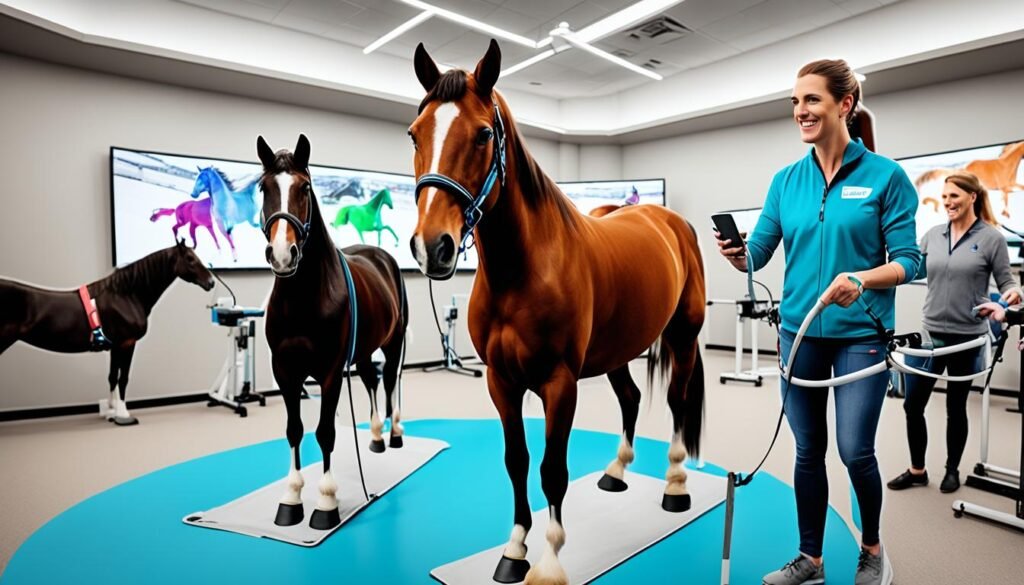
The success of Bella’s case study underscores the immense potential of virtual reality in equine rehabilitation, particularly for horses with rare genetic conditions.
As the technology continues to evolve, the future of equine care promises to be even more personalized, effective, and transformative.
AI-Driven Horse Recovery
In the realm of equine rehabilitation, the integration of artificial intelligence (AI) and machine learning is revolutionizing the way we approach the care of horses with rare genetic conditions.
These advanced technologies are paving the way for personalized, optimized, and adaptive virtual reality-based therapies that can significantly enhance the recovery process.
Machine Learning for Optimal Rehabilitation
By harnessing the power of machine learning algorithms, healthcare professionals can now create personalized rehabilitation plans that cater to the unique needs of each individual horse.
These intelligent systems analyze a wealth of data, including real-time physiological monitoring, movement patterns, and progress indicators, to continuously refine and adapt the virtual reality-based therapy sessions.
Through this data-driven approach, clinicians can make informed decisions, adjust treatment protocols, and provide targeted interventions that maximize the horse’s recovery potential.
The seamless integration of AI and virtual reality technology enables a level of precision and personalization that was previously unattainable, revolutionizing the field of equine rehabilitation.
| Key Benefits of AI-Driven Equine Rehabilitation | Description |
|---|---|
| Personalized Therapy | Machine learning algorithms analyze individual horse data to create custom rehabilitation plans that address their unique needs and genetic conditions. |
| Adaptive Monitoring | Real-time data tracking and analysis allow for continuous adjustments to the virtual reality-based therapy, ensuring optimal progress. |
| Improved Outcomes | The integration of AI and virtual reality technology enhances the effectiveness of rehabilitation, leading to better recovery rates for horses with rare genetic conditions. |
As the field of equine rehabilitation continues to evolve, the synergy between AI, machine learning, and virtual reality is poised to redefine the way we approach the recovery of horses with rare genetic conditions.
By harnessing these innovative technologies, veterinary professionals can provide personalized, adaptable, and highly effective rehabilitation programs that unlock new possibilities for optimal horse health and well-being.
Conclusion
In conclusion, this article has explored the remarkable advancements in virtual reality technology and its transformative impact on the rehabilitation of horses with rare genetic conditions.
The innovative immersive therapies, gamified approaches, and AI-driven solutions presented here have revolutionized the equine rehabilitation landscape, offering new hope and improved outcomes for these remarkable animals.
The integration of virtual reality has enabled customizable virtual environments, multisensory stimulation, and personalized recovery plans, empowering veterinarians and equine specialists to overcome the unique challenges posed by rare genetic conditions.
Through engaging and motivating rehabilitation programs, horses are now able to navigate virtual obstacles, engage in interactive exercises, and receive real-time monitoring and adjustments for optimal recovery.
As the industry continues to embrace the power of virtual reality and advancements in veterinary medicine, the future of equine rehabilitation holds even greater promise.
By harnessing the synergy between cutting-edge technology and compassionate care, we can ensure that horses with rare genetic conditions receive the specialized support they deserve, ultimately enhancing their well-being and quality of life.
FAQ
What is the role of virtual reality in rehabilitating horses with rare genetic conditions?
Virtual reality technology is revolutionizing the field of equine rehabilitation, particularly for horses with rare genetic conditions.
VR-based therapies allow for the creation of customizable virtual environments that can help horses overcome the unique challenges posed by their genetic disorders and engage them in a more immersive and interactive rehabilitation process.
How do virtual reality-based therapies address the needs of horses with rare genetic conditions?
Virtual reality-based therapies are tailored to the specific needs of horses with rare genetic conditions. These customizable virtual environments allow for multisensory stimulation, engaging the horses in a way that helps them adapt and recover more effectively. The use of gamified elements also enhances motivation and participation in the rehabilitation process.
What are the key benefits of using virtual reality in equine rehabilitation?
The key benefits of using virtual reality in equine rehabilitation include the ability to create personalized recovery plans, real-time monitoring and adjustments, and the integration of interactive genetic condition management strategies. This holistic approach helps optimize the horses’ rehabilitation journey and improve overall outcomes.
How does augmented reality complement virtual reality in veterinary medicine?
Augmented reality (AR) technology is also emerging as a valuable tool in the field of veterinary medicine, particularly in the context of equine rehabilitation.
AR can complement virtual reality-based therapies by providing additional visual cues and information to assist veterinarians, rehabilitation specialists, and caretakers in monitoring and managing the horses’ progress.
Can artificial intelligence and machine learning enhance virtual reality-based equine rehabilitation?
Absolutely. The integration of artificial intelligence (AI) and machine learning technologies can further enhance virtual reality-based equine rehabilitation.
These advanced systems can be leveraged to personalize rehabilitation programs, optimize recovery plans, and monitor the horses’ progress in real-time, leading to more effective and tailored treatments.