

The world of equine rehabilitation is undergoing a transformative shift, as virtual reality (VR) technology emerges as a powerful tool in addressing gait abnormalities in horses.
This innovative approach combines the latest advancements in VR with the expertise of equine therapists, offering a remarkable solution for equine gait correction. By immersing horses in captivating virtual environments, VR-assisted rehabilitation programs are revolutionizing the way we approach equine health and performance.
Through the integration of VR, equine rehabilitation has taken on a new dimension, providing horses with an engaging and interactive platform to retrain their gaits. This cutting-edge technology allows for the precise analysis of equine movement patterns, enabling therapists to develop targeted rehabilitation plans tailored to each individual horse’s needs.
By harnessing the power of virtual reality, equine rehabilitation can now offer a comprehensive and personalized approach to gait correction, ultimately enhancing the overall well-being and performance of these magnificent animals.
Revolutionizing Equine Rehabilitation
In the realm of equine therapy, a groundbreaking revolution is taking place. The integration of virtual reality (VR) technology is transforming the way horses recover and perform, especially in cases of gait-related issues.
By harnessing the power of immersive rehabilitation environments and interactive equine exercises, VR-assisted programs are redefining the future of equine rehabilitation.
Integrating Virtual Reality into Equine Therapy
Equine professionals are increasingly embracing the versatility of VR technology. Through customized virtual simulations, horses can navigate through engaging, interactive environments that challenge their proprioception and balance.
These immersive rehabilitation settings allow for targeted exercises, helping horses to regain their coordination and gait stability in a safe, controlled manner.
Benefits of VR-Assisted Equine Rehabilitation
- Improved proprioception and balance: The interactive nature of VR-based exercises enhances the horse’s awareness of their body position and movement, facilitating better coordination and gait correction.
- Reduced risk of re-injury: By gradually introducing horses to challenging scenarios in a virtual setting, the risk of re-injury during the rehabilitation process is significantly reduced.
- Enhanced rider-horse communication: VR-assisted programs often incorporate rider-horse interactions, improving the understanding and communication between the two, which is crucial for successful therapy and long-term performance.
As the equine industry continues to embrace the power of virtual reality, the future of equine rehabilitation is poised for remarkable advancements, paving the way for a new era of improved equine wellbeing and performance.
Understanding Equine Gait Abnormalities
Equine gait analysis is a crucial aspect of maintaining the health and performance of horses. Identifying and addressing gait abnormalities early on can significantly improve the long-term wellbeing and athletic potential of these magnificent creatures.
From musculoskeletal injuries to neurological conditions, a wide range of factors can contribute to disruptions in a horse’s natural gait patterns.
Common Causes of Gait Disorders in Horses
One of the primary causes of gait disorders in horses is musculoskeletal injuries, such as sprains, strains, or even fractures. These types of injuries can affect the horse’s ability to move with ease and efficiency. Additionally, neurological conditions, like equine protozoal myeloencephalitis (EPM), can also lead to gait abnormalities by disrupting the horse’s neural pathways and coordination.
Conformation issues, where a horse’s physical structure is not ideal for optimal movement, can also contribute to gait problems. These structural imbalances can place undue stress on certain joints and muscles, leading to compensatory movements and ultimately, gait irregularities.
Importance of Early Intervention and Rehabilitation
Early intervention and comprehensive rehabilitation programs are crucial for addressing equine gait abnormalities. Digital gait monitoring and motion capture equine systems can provide valuable insights into a horse’s movement, helping identify the root causes of the problem.
With this information, veterinarians and equine specialists can develop tailored horse gait retraining and equine motion analysis programs to restore proper gait mechanics and prevent further complications.
Investing in these innovative rehabilitation techniques, such as VR-assisted equine therapy, can greatly improve the horse’s overall well-being, enhance performance, and extend their athletic careers. By addressing gait issues proactively, we can ensure the long-term health and happiness of these magnificent animals.
VR-Assisted Equine Rehabilitation Programs for Gait Correction
At the forefront of equine rehabilitation, VR-assisted programs are revolutionizing the way we address gait disorders in horses. By seamlessly integrating motion capture systems, interactive equine exercises, and wearable sensors, these innovative programs offer a comprehensive approach to gait correction.
The foundation of VR-assisted equine rehabilitation lies in the use of sophisticated motion capture technology. These systems utilize a network of cameras and sensors to meticulously track and analyze the horse’s movements, providing detailed insights into their gait patterns.
This data-driven approach allows healthcare professionals to identify the root causes of gait abnormalities and develop personalized rehabilitation plans.
Complementing the motion capture technology are interactive equine exercises designed specifically for VR-assisted rehabilitation. Horses can engage in a variety of virtual scenarios, from navigating obstacle courses to participating in simulated herd activities. These immersive experiences not only encourage natural movements but also promote mental stimulation, further enhancing the rehabilitation process.
Wearable sensors play a crucial role in monitoring the horse’s progress during VR-assisted rehabilitation. These sensors collect real-time data on the horse’s gait, providing continuous feedback to the healthcare team.
By tracking key metrics such as stride length, joint angles, and limb coordination, the team can make informed adjustments to the rehabilitation plan, ensuring optimal outcomes for the horse’s recovery.
Through the seamless integration of these advanced technologies, VR-assisted equine rehabilitation programs offer a transformative approach to gait correction. By empowering healthcare professionals with data-driven insights and engaging the horses in interactive exercises, these programs are setting new standards in equine well-being and performance.
Virtual Reality Therapy: A Comprehensive Approach
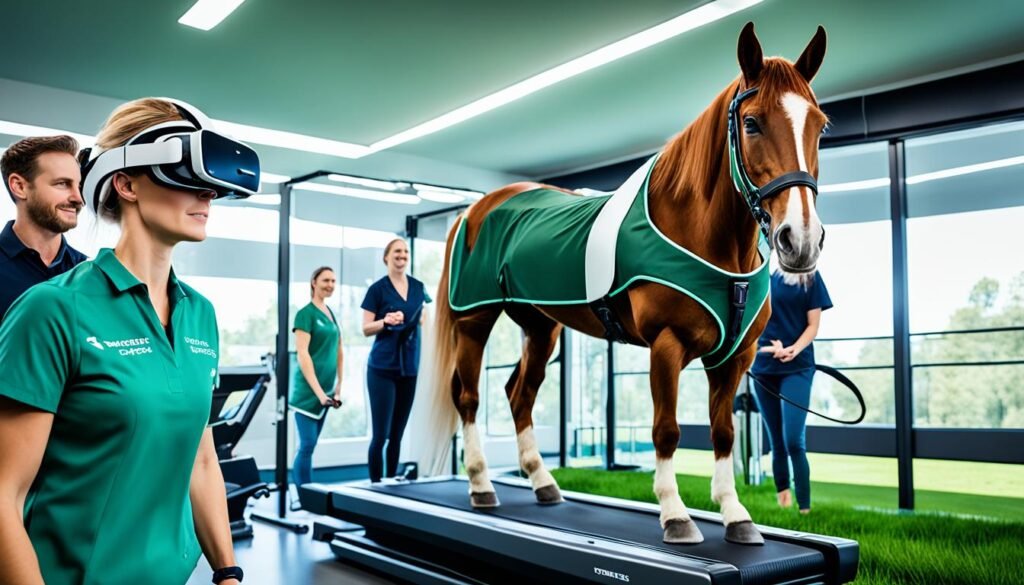
Equine rehabilitation is undergoing a transformative shift, driven by the integration of virtual reality (VR) technology. This cutting-edge approach offers a comprehensive solution for addressing gait abnormalities in horses, revolutionizing the way rehabilitation is conducted.
Immersive Rehabilitation Environments
At the heart of VR-assisted equine rehabilitation are the immersive rehabilitation environments. These virtual landscapes allow horses to engage in interactive exercises and simulations tailored to their specific needs.
Through advanced motion capture and 3D modeling techniques, these environments mimic real-world scenarios, providing horses with a safe and controlled space to practice and refine their gait patterns.
Interactive Equine Exercises and Simulations
The virtual reality therapy approach incorporates a range of interactive equine exercises and simulations. Horses can navigate through virtual obstacle courses, traverse uneven terrain, and engage in augmented reality equine training sessions.
These interactive experiences challenge the horses’ proprioception, balance, and muscle coordination, leading to significant improvements in their overall gait and movement.
By leveraging the power of immersive rehabilitation environments and interactive equine exercises, VR-assisted equine rehabilitation programs offer a comprehensive approach to addressing gait abnormalities. This holistic method not only accelerates the recovery process but also enhances the overall well-being and performance of the horses undergoing treatment.
| Rehabilitation Approach | Key Benefits |
|---|---|
| Immersive Rehabilitation Environments | Safe and controlled virtual landscapes Tailored to individual horse’s needs Enhances proprioception and balance |
| Interactive Equine Exercises and Simulations | Targeted gait and movement training Improved muscle coordination Accelerated recovery and performance |
Digital Gait Monitoring and Motion Analysis
Equine rehabilitation programs are increasingly turning to cutting-edge digital technologies to enhance the effectiveness of their gait correction efforts. Among these innovative tools, motion capture systems have emerged as powerful allies in the quest to understand and address equine gait abnormalities.
Motion Capture Systems for Equine Gait Analysis
Motion capture equine systems utilize advanced sensors and cameras to capture the intricate movements of a horse’s gait in real-time.
By carefully analyzing these digital recordings, veterinarians and equine therapists can gain invaluable insights into the horse’s biomechanics, identifying subtle imbalances or irregularities that might otherwise go unnoticed.
The data gathered from these equine motion analysis systems allows rehabilitation specialists to tailor their treatment plans with precision, targeting specific areas of concern and tracking the progress of their patients with unparalleled accuracy.
This digital gait monitoring technology has become an indispensable component of modern VR-assisted equine rehabilitation programs.
- Equine motion capture systems utilize advanced sensors and cameras to record the horse’s gait in real-time.
- The data gathered from these systems provides valuable insights into the horse’s biomechanics, enabling tailored rehabilitation protocols.
- Digital gait monitoring technology has become an essential tool in VR-assisted equine rehabilitation programs, enhancing the effectiveness of gait correction efforts.
Wearable Sensors and Augmented Reality Integration
The integration of wearable sensors and augmented reality (AR) technology is revolutionizing VR-Assisted Equine Rehabilitation Programs. These advanced tools work hand-in-hand to provide real-time feedback and guidance, empowering both the horse and the handler in the quest for gait correction.
Real-Time Feedback for Gait Correction
Wearable sensors strategically placed on the horse’s body gather vital data on its movement patterns and gait mechanics. This information is then seamlessly translated into augmented reality visualizations, allowing the handler to observe the horse’s gait in real-time and make immediate adjustments.
The AR interface overlays digital markers, guidelines, and graphics directly onto the horse’s physical form, giving the handler a clear understanding of the horse’s movement and any deviations from the ideal gait.
This real-time feedback enables more targeted and effective rehabilitation exercises, accelerating the horse’s progress towards optimal gait and improved overall wellbeing.
By combining the power of wearable sensors and augmented reality, VR-Assisted Equine Rehabilitation Programs provide a comprehensive and interactive approach to gait correction. This innovative integration empowers both the horse and the handler, fostering a deeper understanding of the animal’s movement patterns and facilitating more personalized and effective rehabilitation strategies.
Case Studies and Success Stories
Across the equine rehabilitation landscape, VR-Assisted Equine Rehabilitation Programs for Gait Correction have emerged as transformative solutions, delivering tangible improvements in the lives of horses and their owners.
These innovative programs have paved the way for remarkable rehabilitation journeys, where cutting-edge virtual reality technology seamlessly integrates with equine therapy to address a wide range of gait abnormalities and movement disorders.
Rehabilitation Journeys with VR-Assisted Programs
Take the case of Bella, a majestic Arabian mare who had struggled with a chronic hoof condition that severely impacted her gait. After being enrolled in a VR-assisted rehabilitation program, Bella’s owners witnessed a remarkable turnaround. Through immersive virtual environments and interactive equine exercises, Bella’s gait patterns gradually improved, and her overall mobility and performance were significantly enhanced.
Similarly, Oakley, a Clydesdale gelding, had been dealing with a debilitating knee injury for years. The integration of VR technology into his rehabilitation routine proved to be a game-changer. By simulating natural terrain and obstacle courses, the VR-assisted program helped Oakley regain his confidence and coordination, ultimately leading to a full recovery and a return to his favorite activities.
These are just a few of the many success stories that highlight the transformative power of VR-Assisted Equine Rehabilitation Programs for Gait Correction.
As more horse owners and equine professionals embrace this innovative approach, the future of equine rehabilitation is poised to reach new heights, ensuring the well-being and performance of these magnificent animals.
Enhancing Equine Wellbeing and Performance
The integration of VR-Assisted Equine Rehabilitation Programs for Gait Correction has revolutionized the way we approach equine health and performance. By leveraging the power of virtual reality, these innovative programs have demonstrated remarkable benefits for horses, leading to enhanced wellbeing and improved overall performance.
One of the primary advantages of VR-assisted equine rehabilitation is the ability to address gait abnormalities and correct them through targeted exercises and simulations.
By combining motion capture technology and wearable sensors for horses, equine motion analysis becomes a precise and efficient process. This data-driven approach allows trainers and veterinarians to develop customized rehabilitation plans that address the specific needs of each horse.
- Improved musculoskeletal health and joint flexibility
- Enhanced proprioception and balance
- Strengthened core and postural muscles
- Increased rider-horse communication and trust
The long-term benefits of VR-Assisted Equine Rehabilitation Programs for Gait Correction extend beyond just physical improvements.
Horses that undergo these programs often exhibit increased confidence, reduced stress levels, and a greater willingness to engage in training and performance activities. This holistic approach to equine wellbeing ultimately leads to better outcomes for both the horses and their owners.
As the industry continues to embrace the power of technology, the future holds even more exciting possibilities for the integration of VR and AR into equine rehabilitation and performance enhancement. By staying at the forefront of these advancements, we can ensure that our equine partners receive the highest level of care and support, empowering them to reach their full potential.
Future Directions and Emerging Trends
As the field of equine rehabilitation continues to evolve, the integration of virtual reality (VR) and augmented reality (AR) technologies is poised to take center stage. The advancements in VR and AR for VR-Assisted Equine Rehabilitation Programs for Gait Correction are expected to redefine the landscape of equine therapy, leading to even more effective and personalized rehabilitation programs.
Immersive Rehabilitation Experiences
Future VR-assisted equine rehabilitation programs will leverage highly immersive virtual environments, transporting horses and their handlers into digitally-enhanced training scenarios.
These simulations will offer a higher degree of customization, allowing for the creation of tailored rehabilitation plans that cater to the unique needs of each individual horse.
Augmented Reality Equine Training
Augmented reality is also set to play a pivotal role in the future of equine rehabilitation. By seamlessly integrating virtual elements into the real-world environment, augmented reality equine training will enable handlers to receive real-time feedback and guidance during sessions, further enhancing the efficacy of virtual reality therapy.
Intelligent Gait Analysis and Monitoring
Advancements in motion capture technology and wearable sensors will revolutionize the way equine gait abnormalities are identified and monitored.
Digital gait monitoring and motion analysis will provide unprecedented insights, allowing rehabilitation specialists to make more informed decisions and track the progress of horses undergoing VR-Assisted Equine Rehabilitation Programs for Gait Correction.
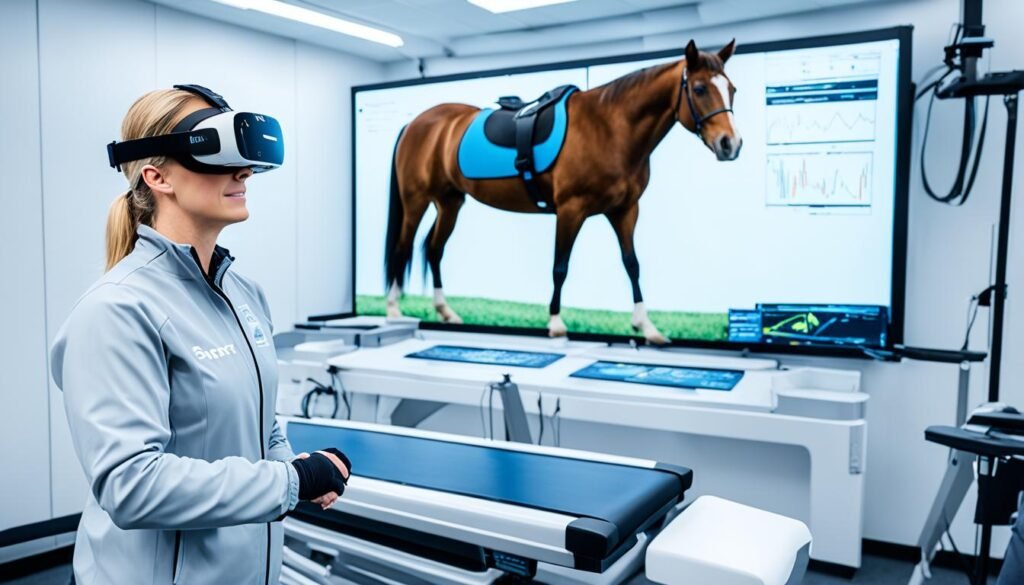
As the industry continues to embrace these innovative technologies, the future of equine rehabilitation promises to be one of enhanced therapeutic outcomes, improved horse wellbeing, and ultimately, a stronger bond between horses and their caretakers.
Conclusion
The integration of VR-Assisted Equine Rehabilitation Programs for Gait Correction has revolutionized the way we approach equine rehabilitation. By leveraging the power of virtual reality therapy, horse owners and veterinary professionals can now unlock unprecedented benefits for their beloved equine companions.
Through the immersive virtual environments and interactive equine exercises, horses with gait abnormalities can undergo targeted rehabilitation tailored to their specific needs. This innovative approach not only enhances the recovery process but also promotes improved performance and overall equine wellbeing.
The incorporation of digital gait monitoring and motion analysis systems further refines the rehabilitation journey, providing real-time feedback and enabling precise gait correction.
As the equine industry continues to embrace these cutting-edge technologies, the future holds even more promise for advancements in VR and AR integration within the realm of equine rehabilitation. By staying at the forefront of this transformative field, we can unlock the full potential of horse gait retraining and ensure the optimal health and performance of our equine partners.
FAQ
What is VR-Assisted Equine Rehabilitation Programs for Gait Correction?
VR-Assisted Equine Rehabilitation Programs for Gait Correction integrate virtual reality (VR) technology into equine therapy to revolutionize the rehabilitation and training of horses with gait abnormalities.
This innovative approach creates immersive rehabilitation environments and interactive equine exercises to enhance the recovery and performance of horses with gait issues.
How does VR technology benefit equine rehabilitation?
VR technology provides several key benefits for equine rehabilitation, including improved proprioception, reduced risk of re-injury, and enhanced rider-horse communication.
By creating immersive rehabilitation environments and interactive exercises, VR-Assisted Equine Rehabilitation Programs can accelerate the recovery process and improve overall gait patterns.
What are some common causes of gait disorders in horses?
Horses can develop gait disorders due to various factors, such as musculoskeletal injuries, neurological conditions, and conformation issues. Early intervention and comprehensive rehabilitation programs are crucial for addressing these gait abnormalities.
What are the key components of VR-Assisted Equine Rehabilitation Programs?
VR-Assisted Equine Rehabilitation Programs utilize motion capture systems, interactive equine exercises, and wearable sensors to monitor and analyze the horse’s gait patterns. These technologies work together to create a personalized and comprehensive rehabilitation experience for horses with gait issues.
How do immersive rehabilitation environments and interactive equine exercises work?
Immersive rehabilitation environments are created using VR technology, allowing horses to engage in interactive exercises and simulations that target specific gait patterns and muscle groups. This holistic approach can lead to improved treatment outcomes and accelerated recovery for horses.
What is the role of digital gait monitoring and motion analysis in these programs?
Digital gait monitoring and motion analysis, facilitated by advanced motion capture systems, play a crucial role in VR-Assisted Equine Rehabilitation Programs.
These technologies capture and analyze the horse’s gait patterns in real-time, providing valuable data to tailor rehabilitation protocols and track progress.
How do wearable sensors and augmented reality (AR) integration benefit gait correction?
Wearable sensors and AR technology work together to provide real-time feedback and guidance to both the horse and the handler, enabling more targeted and effective gait correction exercises. This integration enhances the overall effectiveness of the rehabilitation process.
Can you share some success stories of VR-Assisted Equine Rehabilitation Programs?
Yes, there are numerous case studies and success stories showcasing the positive impact of VR-Assisted Equine Rehabilitation Programs for Gait Correction.
These programs have demonstrated tangible improvements in gait patterns, overall health, and performance for horses undergoing rehabilitation.
How do these programs enhance equine wellbeing and performance?
VR-Assisted Equine Rehabilitation Programs for Gait Correction can enhance the overall wellbeing and performance of horses by improving musculoskeletal health, increasing proprioception, and enhancing rider-horse communication. These long-term benefits lead to better outcomes for the horses and their owners.
What are the future directions and emerging trends in this field?
The future of VR-Assisted Equine Rehabilitation Programs for Gait Correction looks promising, with ongoing advancements in virtual reality and augmented reality technologies expected to further enhance the capabilities and effectiveness of these programs, leading to even more positive outcomes for horses.